Sixteen-year field trial shows organic corn outperforms chemical-intensive fields in Kenya
Published: August 11, 2025
Category: Organic News
Advertisements

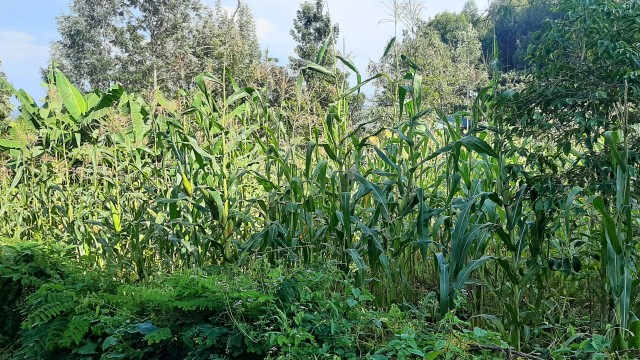
A 16-year field trial in Central Kenya shows that organic farming, particularly low-input systems on degraded soils, can achieve more stable yields than conventional, chemical-intensive agriculture. The study, published in the European Journal of Agronomy, challenges the agrichemical industry’s argument that organic farming cannot support global food security. Conducted between 2007 and 2022 at two sites—Chuka (low soil fertility) and Kandara (higher soil fertility)—the trial evaluated four systems: high-input organic (Org-High), low-input organic (Org-Low), high-input conventional (Conv-High), and low-input conventional (Conv-Low). Organic systems used compost, mulch, and rain-fed methods, while conventional systems relied on synthetic fertilizers, pesticides, and irrigation.
Researchers measured plant growth and yields using standardized statistical methods. They found that organic systems steadily improved soil fertility over time. At Kandara, Org-Low had the most stable yields, and Org-High yields eventually matched Conv-High yields, especially on less fertile soils. Low-input systems, particularly organic ones, provided consistent yields across seasons. The findings reinforce that organic farming can match or exceed conventional yields once soils adapt.
This trial aligns with decades of research, including the Rodale Institute’s 40-year Farming System Trial, which found that organic systems are more profitable, resilient to drought, and environmentally sustainable. Organic farming uses less energy, emits less carbon, prevents toxic runoff, and produces competitive yields after a transition period. Similar results have been seen with organic bananas in Martinique, regenerative organic agriculture in Europe, and organic coffee production in Peru, all showing enhanced soil health, biodiversity, and reduced carbon footprints.
Successful organic alternatives have emerged even for crops once considered unfeasible to grow organically, such as cotton and hops. For example, the Center for Agriculture and Bioscience International (CABI) received the 2024 Innovators Award from the Better Cotton Initiative for expanding organic standards in Pakistan, where cotton accounts for 69% of agricultural pesticide use. In the U.S., regulatory changes—such as removing hops from the list of permitted non-organic ingredients in organic beer—have supported the transition to fully organic production.
Kenya is also shifting toward stricter pesticide regulation. In 2025, the Pest Control Products Board banned 77 pesticide products and restricted 202 more that are not approved in the EU, Canada, or the U.S., citing health risks. Ingredients like Acephate and Thiacloprid were deemed to pose “unacceptable risks.” Earlier in the year, Kenya’s Court of Appeal blocked GMO imports, reflecting growing political and public support for agroecology and pesticide-free farming.
The study highlights the long-term benefits of organic farming: improved soil fertility, competitive yields, environmental protection, and resilience to climate stress. It provides strong evidence against claims that organic farming threatens food security. Instead, it shows that, with time and proper management, organic systems can equal or outperform conventional systems while offering broader ecological and health benefits.
The authors urge policymakers to adopt structural reforms that incentivize organic and regenerative farming over petrochemical-based agriculture. They advocate for reducing pesticide and fertilizer dependence, aligning policies with the growing body of evidence supporting organic systems. This includes encouraging organic production for crops like cotton and hops, which have seen recent progress through global initiatives and regulatory changes.
As many Global South nations reevaluate Green Revolution-style approaches, Kenya’s actions illustrate increasing political momentum toward sustainable farming. The trial underscores that organic systems are not only viable but advantageous, offering a pathway to resilient, profitable, and ecologically sound agriculture worldwide. The call-to-action urges citizens to pressure governments to transition toward organic, regenerative land management and reshape policies that favor chemical-intensive agriculture.
Source: Beyond Pesticides
To view source article, visit:
Organic & Non-GMO Insights August 2025
Advertisements