
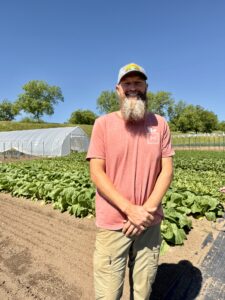
Stephen McCrae – Farm Manager of Hartness Farm, hosting a farm visit for the Swamp Rabbit team
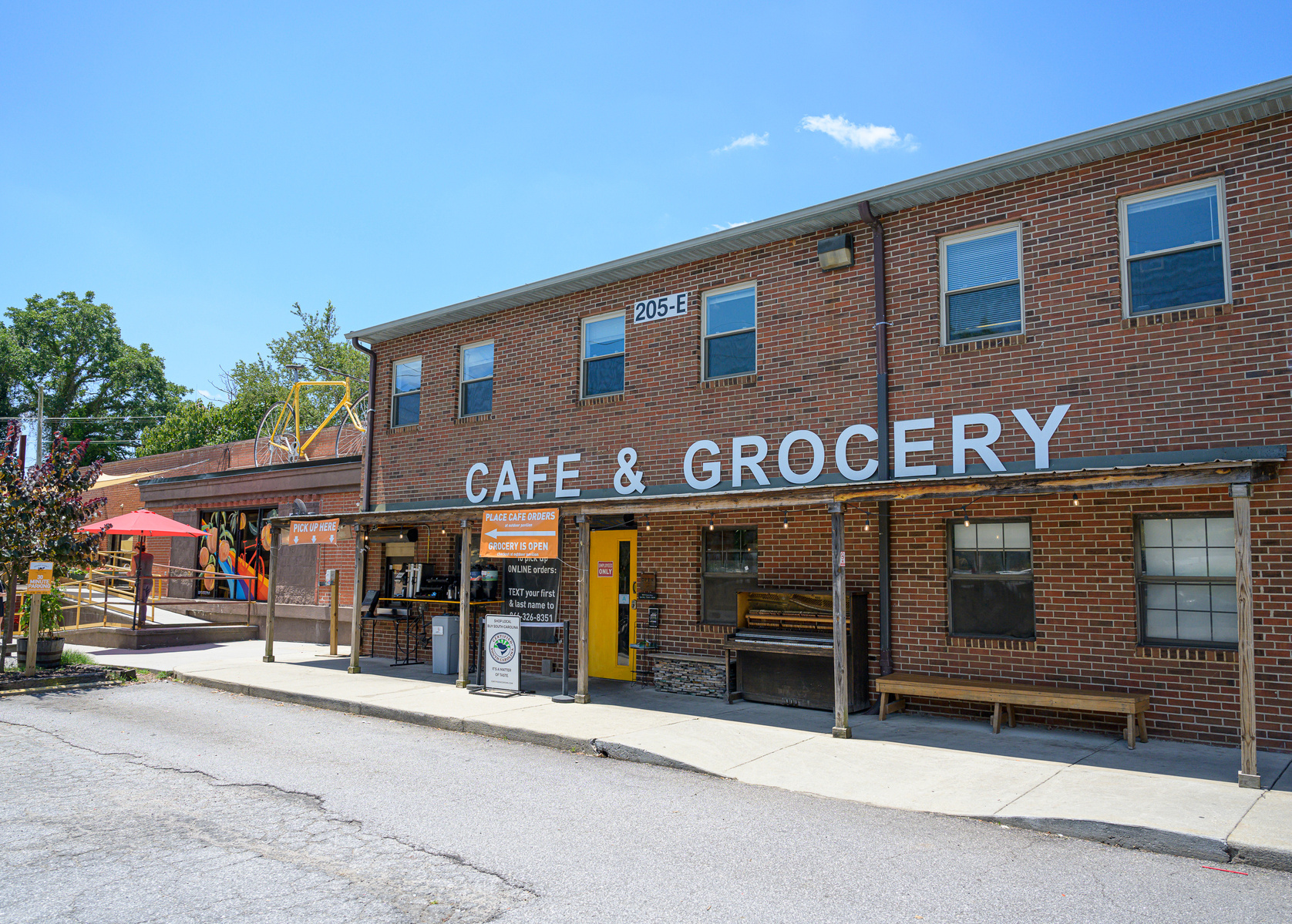
How Swamp Rabbit Cafe & Grocery Creates Reliable Markets for Small Farms
By Kendra Morrison
In regional food systems, harvest begins with commitment.
Long before crops are picked, farmers need confidence that buyers will be ready when products come out of the field. At Swamp Rabbit Grocery & Cafe, that commitment takes shape through early-season planning, transparent communication, and long-term partnerships that connect local growers with local consumers. Through its Food Hub, the community-focused market works closely with local growers to forecast demand, coordinate production, and create dependable sales channels. The result is a system that gives farmers greater confidence heading into the season while ensuring customers have access to fresh local food throughout the year.
According to Food Hub Manager Justin Roller, conversations with growers begin each January, when the Swamp Rabbit team reviews sales data from the previous year and discusses planting plans for the season ahead.
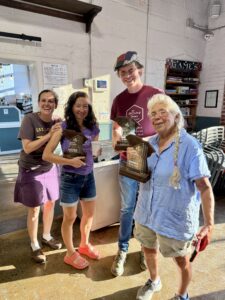
Swamp Rabbit founders/owners Mary Walsh and Jac Oliver at the Good Ground Exchange with award winning farmers Margie Levine of Crescent Farm and Nathan Vannette of Growing Green Family Farms
“We start conversations with our growers in January to give them an overview of what items sold well the year before and what items didn’t,” Roller specified. “Our Farmer Outreach Coordinator gives them sales data and finds out what they plan on growing, how much they are planting, and a general time frame they expect to harvest. This is an overview – more in-depth conversations happen seasonally. We then have an idea of what to expect from each grower and when to expect it. We can then start looking for other producers to fill gaps. This may entail on-boarding new farmers or coordinating with other Food Hubs in our network.”
Those discussions provide a roadmap for the coming season. Swamp Rabbit gains a clearer picture of expected supply while farmers gain insight into market demand. The information also allows the Food Hub to identify gaps early, whether by onboarding additional growers or coordinating with partner food hubs.
The process reflects a philosophy that has guided Swamp Rabbit’s relationships with producers for years: growth happens together.
For Roller, trust is the foundation of every successful partnership. Farmers need confidence that their products will be valued, fairly priced, and paid for promptly.
“An understanding that we will always go above and beyond to find outlets for their products,” Roller acknowledged. “Knowing that we will always buy and sell as much as we possibly can. And we’ll always pay a fair price and pay on-time. That’s a big deal.”
That commitment becomes especially important during harvest, when growers face pressure to move highly perishable products quickly. Swamp Rabbit’s Food Hub reduces much of that uncertainty by connecting production directly to demand.
Each week, wholesale customers submit orders, which are combined with the needs of the grocery and cafe. Farmers then harvest specifically for those orders.
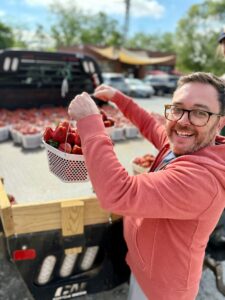
Justin assisting with a strawberry delivery
“Nothing goes to waste,” Roller informed. “Nothing is harvested and then needs to find a home.”
The model streamlines logistics for producers. Swamp Rabbit handles the marketing, distribution, and coordination, allowing farmers to focus on production.
Historical sales records help guide purchasing decisions, while creative merchandising ensures seasonal abundance reaches customers.
Strawberry season offers one example. Swamp Rabbit prioritizes high-quality berries for retail sales while incorporating day-old fruit into smoothies and other cafe offerings. The strategy maximizes product utilization, reduces waste, and creates opportunities to purchase larger volumes from local growers.
“We pay close attention to our sales records from the past and always look for ways to buy and sell more year after year,” Roller elaborates.
Beyond supporting individual farms, Roller sees committed local buyers as essential infrastructure for resilient regional food systems. “When disaster strikes, like bird-flu, and supply chain issues, our local farmers are there for us. They are generally unaffected by these issues,” Roller explains. “Their chickens have plenty of space to roam and aren’t crowded into packhouses. The trip to and from their farm to our warehouse is generally an hour, not days on a truck traveling across the country.” Strong local networks create stability during supply chain disruptions while keeping food dollars circulating within the community.
“The normal we work hard to create, and would love to see across the board, is our food grown around the corner by people we know,” Roller shared. “It is fresher, tastier, more nutritious, and the money we spend on it stays in our community and supports our neighbors.”
For communities interested in strengthening local agriculture, his advice is straightforward.
“Just commit to it,” he encouraged. “Find your farmers and help them grow alongside you. Forge lasting partnerships with them.”
As harvest season approaches, Swamp Rabbit Grocery offers a practical example of what that commitment looks like. By building demand before harvest begins, coordinating logistics after crops are picked, and investing in long-term farmer relationships, the market has created a model that benefits producers, consumers, and the broader regional economy.
Successful harvests require more than healthy crops. They require strong markets ready to receive them.
Advertisements