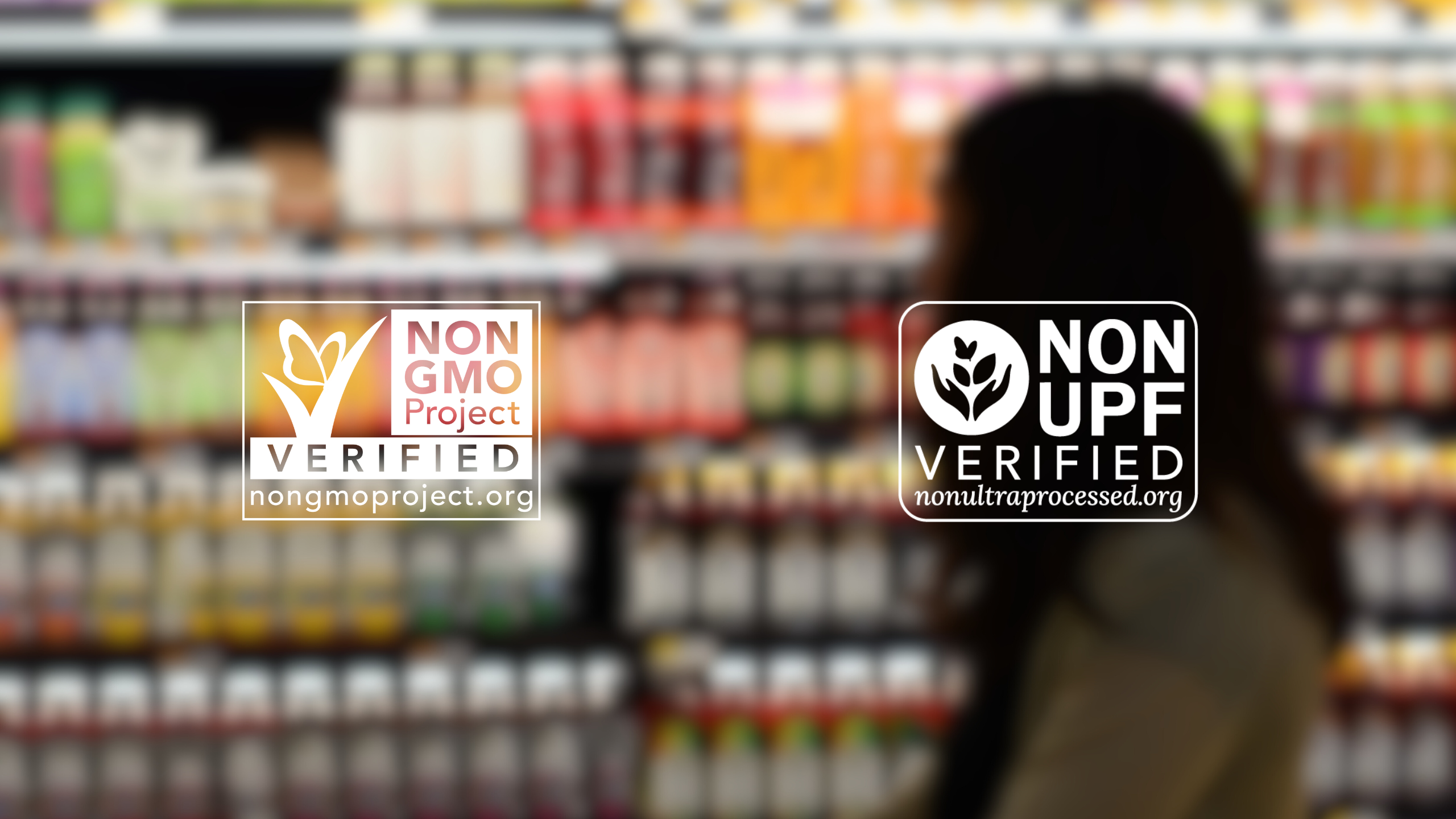
Non-UPF Verified Program Opens Enrollment to Address Ultraprocessed Foods
By Kendra Morrison
Published: February 21, 2026
Category: The Non-GMO Blog
Advertisements

New certification designed to help consumers identify foods with minimal processing, offering brands a framework for reformulation. The program is the first of its kind to evaluate not just nutrient composition, but manufacturing methods, ingredient specifications, and formulation techniques, addressing concerns about the health impacts of ultraprocessed foods.
Research shows that two products with identical nutrient profiles can produce different effects on appetite, weight gain, and metabolic health depending on the degree of processing.
The Non-UPF Verified Standard distinguishes between acceptable processing, such as grinding, fermenting, or freezing, and ultraprocessing methods, including chemical fractionation, high-pressure extrusion, and synthetic additives. The Standard also sets quantitative limits on refined added sugar while maintaining essential fats and naturally occurring mineral salts.
Retailers may benefit by differentiating offerings with a credible, third-party verification mark, while consumers gain a clearer guide amid confusing marketing claims. Early research indicates that 65 percent of shoppers would be more likely to purchase products carrying the Non-UPF Verified label.
The program builds on the Non-GMO Project’s established third-party verification model, which has certified more than 63,000 products in North America since 2007. Enrollment is open for brands seeking to align with emerging health and transparency trends.
Sources: Non-GMO Project, Non-UPF Verified Press Release, January 2026; Food Integrity Collective, Understanding Ultraprocessed Foods: A Framework for Action, 2026.
Advertisements