
By Kendra Morrison
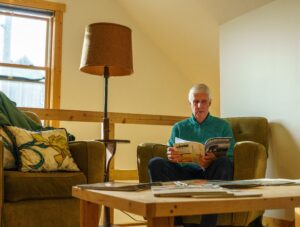
Sunset rays pour in from the window, lighting Ken’s profile as he flips through the last magazine he worked on, the November 2025 issue. “I like this paper,” Ken confirms “feels recycled.” He rubs the texture between his fingers, anticipating the click of my camera.
Sitting across from him, in the team’s new headquarters, he reflects on his simple start. “I did some organic farming back in 1979,” he recalls. “I learned how hard farming is.” The experience was brief, but formative. It offered a perspective that would later shape how he approached the people and systems behind the stories he covered.
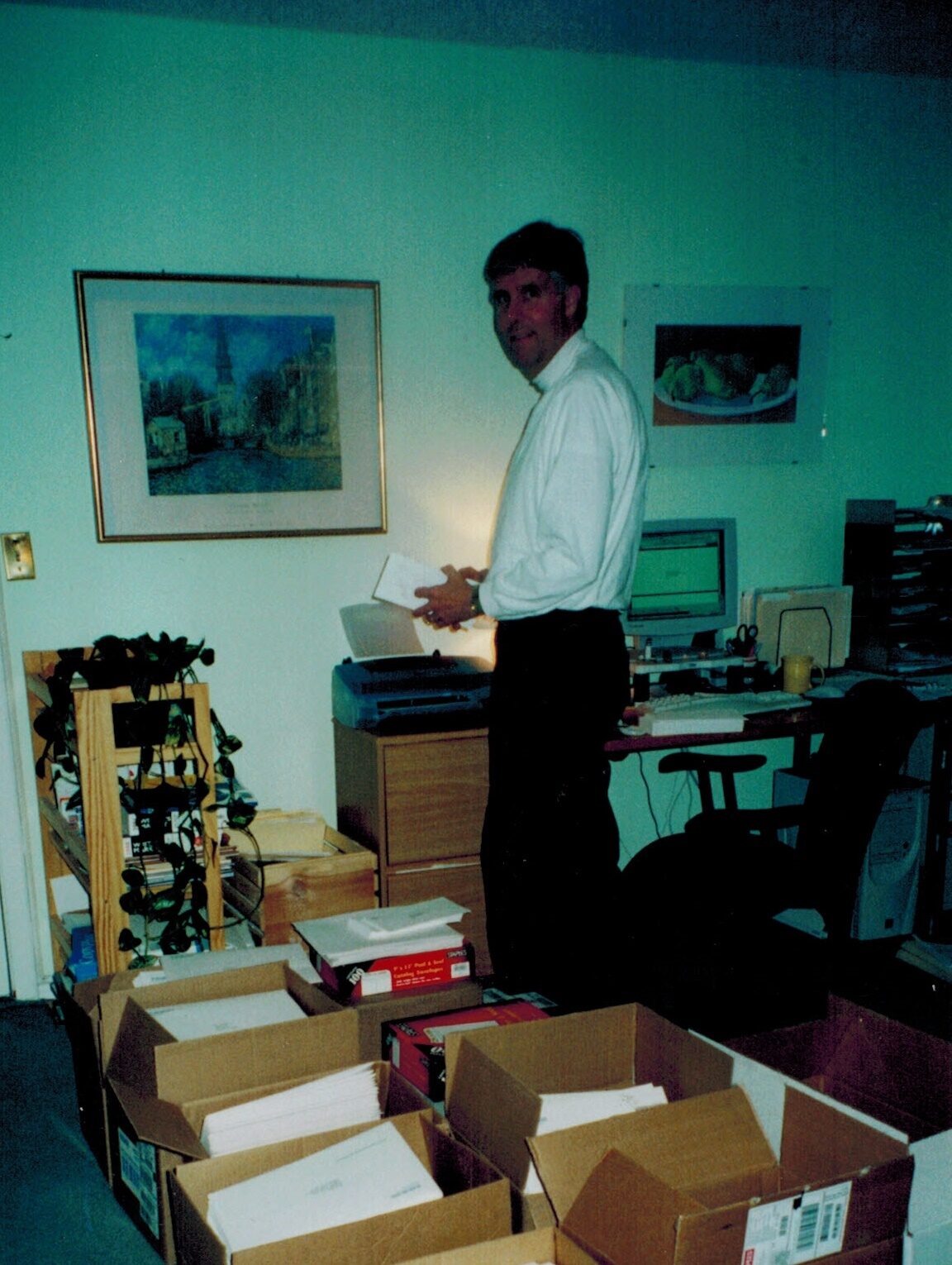
His professional path moved toward writing. After earning a degree in professional writing, he began reporting on the grain industry in the Midwest. “I was writing some of the most boring articles you can imagine,” he says, describing early work on grain elevators and storage systems. “But it was a steady gig.” That steady work gave him access. As genetic engineering began entering agriculture, he found himself writing about early GMO seeds and, eventually, GMO testing. By 2000, the term non-GMO had barely entered the broader industry vocabulary. “It was almost an obscure term,” Roseboro says. “You’d hear it in the grain industry when shipments were going to Europe or Japan.” He began to see a pattern that others were not documenting. “Nobody was really giving that coverage,” he says.
After six months of research and industry calls, he launched the first issue. “Some people told me non-GMO was kind of a negative term,” he says. “But I stuck with it.” The first publication was eight pages. “In the early years, I wondered how I was going to fill it,” he admits. That uncertainty would not last. “As the non-GMO sector grew, the publication grew,” he says. What began as a question of whether there was enough to cover became, over time, a question of how to keep up.
Some of the publication’s most lasting influence came not through headlines, but through connection.
In the mid-2000s, Roseboro reported on a small, emerging idea that would later become the Non-GMO Project. At the time, it was little more than a concept circulating among natural food retailers. The piece reached individuals who would go on to build the verification system, connecting testing expertise with retail demand. “We helped make the connections that made that project happen,” he says.
The same instinct led to the creation of the Non-GMO Sourcebook. “There were all these different companies doing pieces of thew ork,” he says. “Testing labs, grain suppliers, food companies, but no central place to find them.” He built one. The directory quickly became a working tool for the industry.
Major buyers used it to source ingredients and vet suppliers. “We put all these companies together into one place,” he says. “People really valued that.”
As the industry expanded, so did the complexity of the stories behind it. One of the most defining challenges was not growth, but integrity. “Fraud is happening. It has to be reported on,” he says. “Even if it makes people uncomfortable.”
“Journalism is about balance,” he says. “Getting both sides. There are a lot of independent thinkers with strong opinions,” he says. “Getting consensus is almost impossible.”
Through all of it, his approach remained consistent. “I was just showing up every day and putting out the news,” he says. “I didn’t have any big plans.”
After nearly 25 years, the decision to step away came gradually.
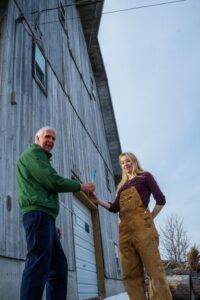 “I’m over 70 now,” he says. “I didn’t have the energy I did when I started.” Running the publication meant carrying both editorial and business responsibilities. “The last few years, I felt like I was treading water,” he says. Stepping back was less about leaving and more about allowing space for something new. “I want to see it continue to grow,” he says. He points to its role as an independent voice in an industry where many stories still go untold. “We report on news that otherwise wouldn’t be reported,” he says.
“Organic is going to continue to grow,” he says, driven by increasing consumer awareness. Regenerative agriculture, while still unsettled in its definitions, is gaining momentum. “Overall, I think it’s a good trend,” he says. He also points to a broader shift in how people think about food. “People are becoming more aware of what they’re eating,” he says. “That’s only going to increase.”
For those continuing the work, his guidance is direct. “Some of the news can be depressing,” he says. “Don’t get depressed. Stay positive.” He points instead to the people behind the system. “There are a lot of people out there doing good work,” he says. “Farmers, companies, people trying to make a difference. Focus on those stories.”
Over 25 years of showing up and doing the work has created a legacy with lasting impacts. A record of an industry as it found its footing. A network built story by story. And a voice for the organic and non-GMO industry.
Advertisements