By Helen Freeman
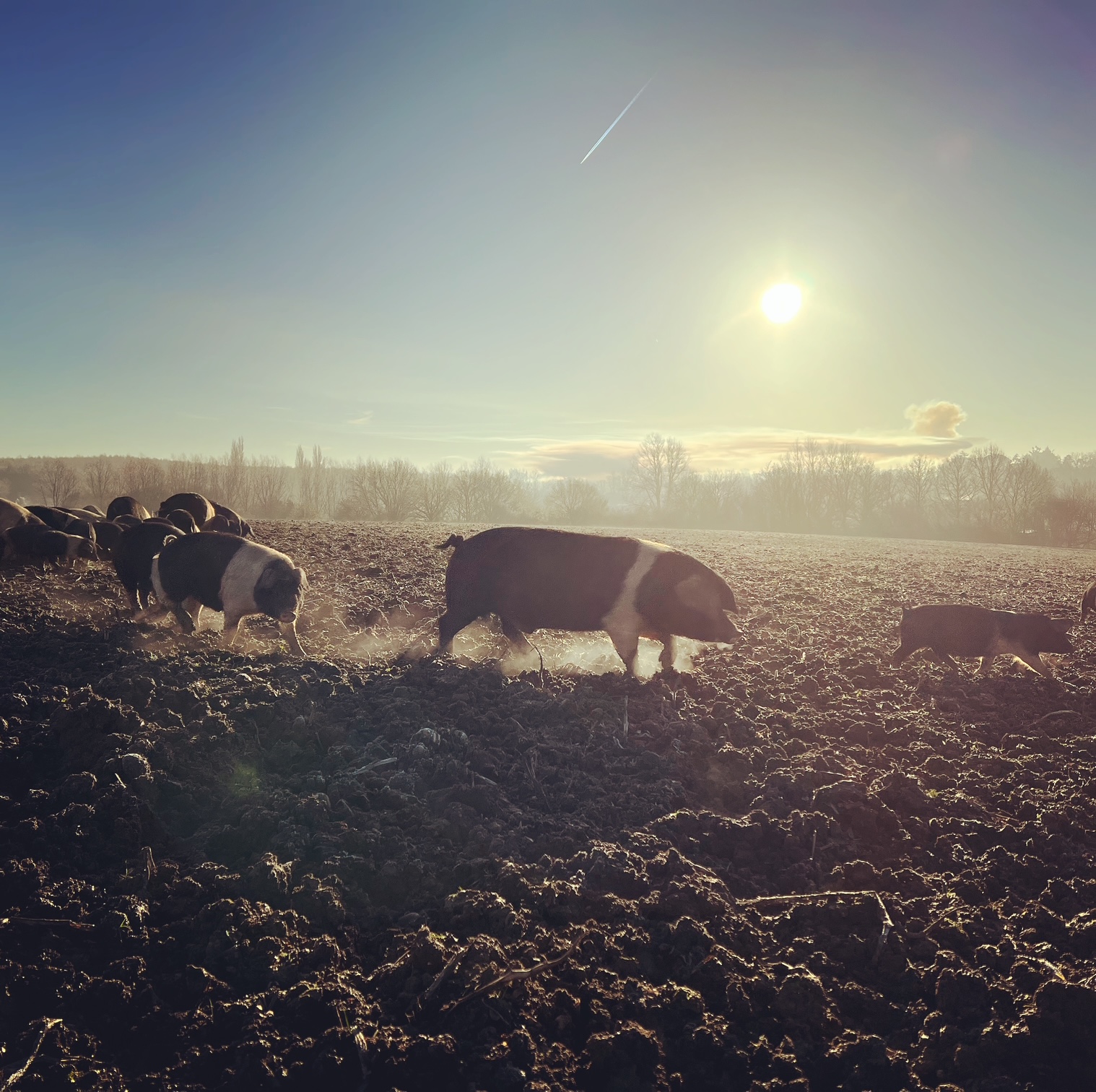
In an arable rotation, pigs can function as a biological clean-up crew, turning losses and residue into fertility. When pigs follow harvest, they can convert missed crop and residue into manure, targeted ground disturbance, and a cleaner start for the next planting.
Integrating livestock into arable systems is often discussed in broad terms, but pigs are a specific tool with specific risks. In the right place in the rotation, pigs can help an arable business capture value from post-harvest losses, recycle nutrients back into the field, and reduce reliance on purchased inputs in the following establishment. In the wrong conditions, they can compact soil, create bare ground, and increase runoff risk quickly. This case study draws on a pasture-based pig system in Hampshire, UK, to illustrate where pigs can add value for arable farmers, and which management choices most influence outcomes.
The system combined a fixed breeding unit with a fattening herd that rotated across rented arable fields under a range of agreements. The breeding herd included 35 sows, and the enterprise produced around 500 finished pigs per year.
Soils across the sites were largely clay or chalk. Clay can be vulnerable to poaching in wet periods, while both clay and chalk can bake hard in dry summers. In practice, outcomes depended less on the animal and more on timing, stocking density, and rotation.
Where pigs can add value in an arable rotation
In this model, pigs were best suited after harvest. One of the most effective integrations was after potato harvest, where tubers can remain in the ground and affect the following crop if left unmanaged. Pigs are natural gleaners and can clear missed potatoes and crop residue while distributing manure across the field.
For an arable farmer, the appeal is practical:
- Field clean-up after harvest. Pigs can reduce the burden of volunteers and missed crop, particularly after roots and vegetables.
- Nutrient cycling. Pig manure can be a meaningful nutrient input, particularly for phosphorus and potassium, and when managed well it can reduce the following crop’s reliance on purchased fertiliser.
- A planned reset window. Using pigs as a defined phase can create a clear end point before reseeding pasture, establishing a cover, or moving into the next crop.
A field example
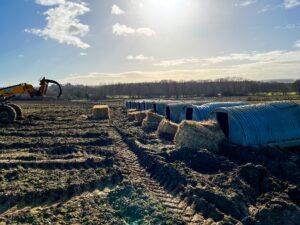
After potato harvest in 2021, the fattening herd was moved onto a 50-acre field and remained there through to March. The pigs foraged and cleared missed potatoes while spreading manure across the area. After the herd moved to the next grazing site, the field was brought back into pasture. The land was cultivated and planted, and the farmer observed that where pigs had foraged and rooted more intensively, the pasture established faster.
The risks and the controls that matter
The same behaviours that create value can create damage if unmanaged. On clay soils, heavy rain can turn high-traffic areas into mud quickly, increasing runoff risk and reducing ground cover. In dry summers, wallows and repeated traffic can become focal points for compaction.
To function as a regenerative tool rather than a degradation risk, management focused on three practical controls.
- Rotation within the site. Even when pigs stayed on the same overall field for several months, they were moved into different sections to avoid repeated pressure on the same ground.
- Rotation between sites. Sites were typically changed one to two times per year, depending on conditions and agreements.
- Timing and reset. Post-harvest windows aligned pig impact with a period when the field could be reset into pasture or the next crop, rather than leaving disturbed ground exposed for long periods.
Partnering with pigs
For arable farmers who do not want to run pigs themselves, a pig tenant can be a practical way to test the concept. The strongest agreements are simple and specific: timing, stocking approach, infrastructure responsibilities, and a clear plan for how the field is handed back.
Why this matters beyond one farm
This kind of integration will not look identical everywhere, especially across different climate zones and soil types. But the principles travel. For arable farmers considering pigs, the opportunity is to treat livestock as a tool for post-harvest clean-up and nutrient cycling, while managing the risks with clear layout, movement, and a defined exit plan.
When those conditions are met, pigs can support a three-way outcome: cleaner fields and improved establishment for the landowner, a more reliable route to lower purchased inputs over time, and a workable partnership model for livestock producers that keeps the whole system grounded in the rotation.
 Author bio
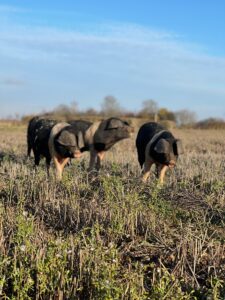
Helen is the writer behind Me My Pigs and I on Substack and a former pasture-based pig farmer in Hampshire, UK. She also works with Farms Not Factories, a non-governmental organisation that has campaigned against factory pig farming for over 15 years through public screenings, films, and social media.
Disclosure
The author previously operated a pig enterprise and has professional experience in pasture-based pig production and grazing agreements. She also works with Farms Not Factories, which campaigns against factory pig farming and encourages consumers to buy local, high-welfare, ethically produced pork; its long-term vision is a world without factory farms.
Advertisements