By Kendra Morrison
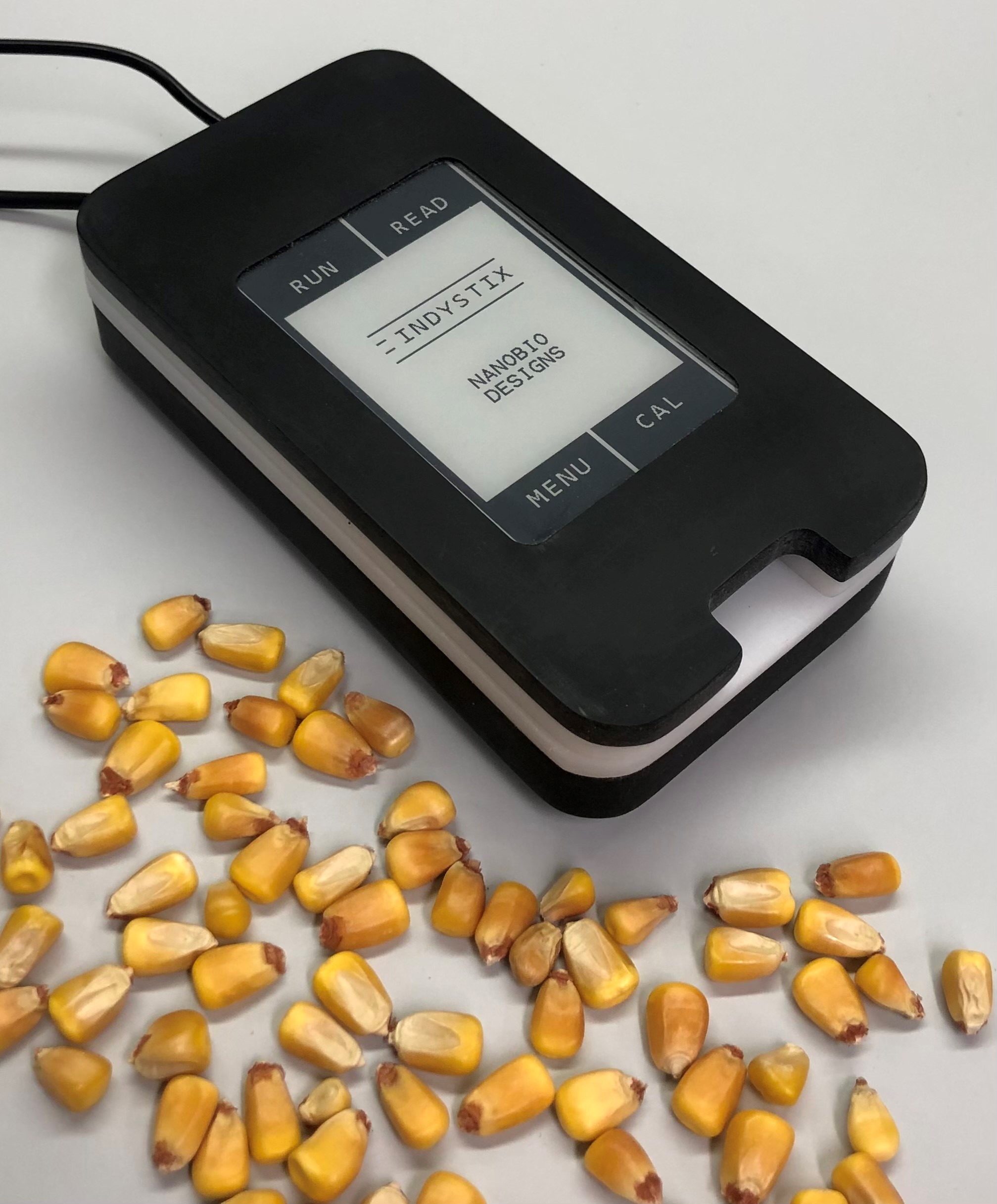
Rapid on-site genetic testing is poised to transform how identity-preserved and non-GMO grains are verified in the United States. NanoBio Designs, a technology startup developing portable DNA detection tools, is demonstrating that verification does not need to wait for centralized laboratories. By enabling grain handlers to measure genetic traits directly at elevators, processing facilities, or on-farm, the company’s platform promises faster, more reliable decisions for buyers and producers navigating increasingly complex specialty markets.
Traditional verification methods rely on PCR-based laboratory testing, which amplifies DNA to confirm the presence of genetically modified traits. While highly sensitive in controlled environments, these tests require shipping samples offsite and waiting several days for results.
In contrast, NanoBio Designs’ system detects DNA sequences directly in crude grain samples using programmable particle probes. Ryan Skaar, COO, explains that the probes function like a “lock-and-key” system: each short DNA sequence is designed to bind only its intended target, allowing the platform to distinguish even closely related traits. According to Skaar, the design requires only 10–25 unique oligonucleotide sequences to reliably detect a specific trait.
Sample preparation is intentionally simple. Derek, the company’s CTO, describes it as making a “soybean espresso”: grain is ground, mixed with heated water, and filtered to produce a crude extract suitable for testing. This non-amplifying, particle-based approach reduces susceptibility to contamination and false positives compared with conventional PCR, and is tolerant of dust, mixed kernels, and other real-world sample conditions.
The platform delivers results in under fifteen minutes, with sensitivity tuned to thresholds relevant for identity-preserved supply chains, including the 1% adventitious presence standard commonly used in grain trade. Todd Kielkopf, CEO and lead investor, emphasizes that the technology allows for practical verification where grain is handled, providing near-instant information to support purchasing decisions and reduce risk.
Pilot programs with soybean producers are underway to evaluate the system in operational settings. Chris Seward, the company’s go-to-market officer, notes that rapid on-site verification could reshape contracting and procurement practices. Current rapid protein-based methods measure expressed traits indirectly, sometimes producing variable results when protein levels fluctuate. In contrast, molecular detection measures DNA directly, reducing uncertainty and providing confidence in decisions about load acceptance, segregation, and identity-preserved contracts. Seward adds that this capability may also prepare the industry for emerging genetic modifications, including CRISPR-edited crops, which may not express detectable proteins.
The platform is designed to be agile in adapting to new traits. Developing a new assay begins with identifying a unique DNA sequence associated with the trait, which can come from public databases or seed developers. Once candidate sequences are identified, particle probes are functionalized and tested. Skaar says that a market-ready assay can be developed in as little as two weeks, allowing the system to keep pace with the evolving crop genetics landscape.
Looking forward, the company envisions a hybrid model in which on-site molecular testing complements traditional laboratory verification. Rapid testing at elevators could reduce the number of PCR samples sent offsite, streamline logistics, lower costs, and improve statistical confidence in identity-preserved programs. Seward anticipates that larger specialty programs will maintain rigorous truck-by-truck testing, while smaller programs could adopt on-site molecular assays to meet new complexities efficiently.
As non-GMO and specialty grain markets grow, NanoBio Designs’ technology illustrates a broader trend toward decentralized, on-farm verification, moving the industry closer to real-time assurance of crop identity. By bringing molecular diagnostics to the point of handling, grain buyers, processors, and farmers can act with greater confidence, potentially reshaping how certification and quality standards are maintained in a rapidly evolving agricultural landscape.
Sources: NanoBio Designs company website, March 2026; AgFunderNews, “From Super-Heated Bioreactors to Rapid Onsite GMO Tests: Meet the AgriNovus Velocity Winners,” March 2026; Hoosier Ag Today, “NanoBio Designs Demonstrates Rapid Onsite GMO Detection,” September 2024; Interviews with Todd Kielkopf, Chris Seward, and Ryan Skaar, NanoBio Designs, March 2026.
Advertisements