By Kendra Morrison
“Dad used to say we had 2 kinds of organic farmers,” David Vetter shared. “One is organic according to the rules and the other is organic by practice.”
That distinction shaped the development of Grain Place Foods long before organic agriculture became a nationally standardized market. In the late 1970s, farmers experimenting with organic production across the Midwest often lacked access to buyers, processing infrastructure, and grain handling systems capable of maintaining product integrity from the farm to the customer.
The problem became clear when the Vetter family began receiving requests from emerging natural food businesses for organic ingredients. One early customer, a tofu startup, needed soybeans cleaned and packed in 50-pound bags for food use. Finding a facility capable of handling that work proved difficult. Many seed-cleaning operations treated seed with pesticides, making them incompatible with organic food processing. The family then tried several small popcorn facilities across Nebraska, many operating from older wooden grain elevators that could not be fully cleaned between products.
“We ended up with 2 disappointed customers,” Vetter recalled. “Popcorn people did not appreciate an odd soybean now and then in their popcorn, and the tofu maker could not make good tofu with popcorn.”
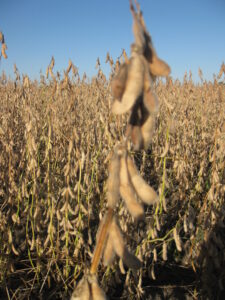 Eventually, the family located a seed-cleaning facility more than 100 miles away that could handle the work, though the transportation distances created major logistical burdens. At the same time, requests for organic popcorn and additional grains were beginning to emerge.
“We had no idea if there was enough of a market to justify the investment and the risk,” Vetter admitted. “But decided the only way to find out was to do it.”
That decision led to the creation of Grain Place Foods in 1987. What began as an effort to add value to a relatively small Nebraska farm evolved into one of the early regional systems connecting organic grain growers to national and international specialty markets.
The roots of the business stretch back even further. David’s father, Don Vetter, adopted organic practices in 1953 after becoming skeptical of agricultural chemicals promoted during the postwar farming boom.
“He was taught that the chemicals would not hurt the soil, endanger wildlife and affect human health,” David explained. “His observation after 4 to 5 years showed him otherwise.”
Those observations shaped not only the family farm, but also David Vetter’s approach to market development after returning to the operation in 1975 with backgrounds in agronomy and theology. Rather than viewing organic farming simply as a production system, Vetter increasingly saw the need to build the infrastructure and relationships capable of sustaining specialty markets over the long term.
As Grain Place Foods expanded, the company also became a regional delivery and marketing point for organic growers who otherwise faced significant logistical and market barriers.
“Because we had the processing here, we had a regional delivery point for potential organic farmers in the area and made the decision to try it a little easier,” Vetter elaborated. “Organic farmers are still widely dispersed and volume markets come with a big delivery cost.”
Today Grain Place works regularly with about 16 growers, while coordinating with additional producers for specific customer projects. In the company’s early years, the Vetter family farm supplied roughly 90 to 95 percent of the organic products being processed. Today, that figure is closer to 5 percent. As the company expanded, so did their network, spreading across the nation and into Canada in order to secure quality supply for specialty markets.
“We were able to survive those early years because of some steady customers in Germany and Japan,” Vetter said.
According to Vetter, one of the most important turning points came with implementation of the Organic Food Production Act in 2002, which established uniform national standards and a legally recognized organic seal.
“A uniform standard with a legal definition and a standard seal made it easier to bring new organic products to market,” Vetter said. “It has grown every year since.”
Early buyers were often satisfied with verbal assurances that products had been grown organically. Today, specialty grain markets require extensive traceability systems, third-party verification, laboratory testing, and customer-specific quality standards.
“Now most products leave with a certificate of analysis,” Vetter explained. “Customers also may specify what needs to be included in that report.”
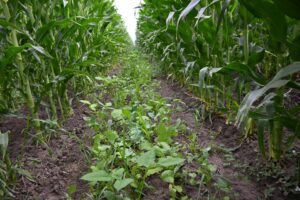 Maintaining those standards has become increasingly complex as weather variability, moisture levels, and mycotoxins create additional risks throughout organic grain supply chains.
“We first started monitoring mycotoxins in the late 80’s,” Vetter said. “We only checked for aflatoxin. Now we test for two additional ones on a routine basis and some customers request another two tests.”
The operational demands of specialty grain markets also pushed Grain Place toward continued infrastructure expansion. “Warehousing capacity became very important,” Vetter said. “With growth we could no longer process products in time.”
Sourcing networks also became increasingly global. Some imported ingredients helped fill supply gaps that domestic production could not meet, particularly during periods when organic acreage lagged behind market demand. However, the rapid growth of international supply chains also introduced new vulnerabilities for specialty grain markets built on trust and verification.
“Fraud from poorly regulated imports has created unfair competition for domestic farmers,” he urged. “We need to be doing more enforcement on imports, not less.”
For Grain Place Foods, those challenges have reinforced the importance of maintaining close relationships throughout the supply chain. Today the company works regularly with a relatively small network of growers, many of whom have supplied grain to Grain Place for decades. That long-term approach, Vetter believes, remains essential in specialty markets where quality expectations continue to become more demanding.
“There will always be an opportunity with identity-preserved grains,” he said, “but that long term success will be dependent on committed partner(s) between the farmer and the dinner table.”
Advertisements