By Ken Roseboro
As more products labeled “regenerative” appear on store shelves, a new analysis reveals very different certification standards including minimal or no requirements for reducing the use of harmful pesticides.
As the regenerative agriculture trend continues to grow, an increasing number of regenerative certification programs have emerged. With that, food products labeled “regenerative” are appearing on store shelves.
A new Friends of the Earth report on regenerative food labels reveals a fast growing—but inconsistent—marketplace that risks causing consumer confusion. The report, “Regenerative Food Labels: What’s Behind the Claim?” finds that products can bear similar regenerative claims but may represent vastly different farming practices on the ground.
Some Regenerative Programs Allow Use of Pesticides
“While consumers might reasonably assume that ‘regenerative’ food is grown without toxic pesticides, that’s not always the case,” said Sarah Starman, senior campaigner at Friends of the Earth U.S. “Some regenerative labeling programs allow the use of synthetic pesticides, including substances linked to cancer, hormone disruption, infertility, and neurological harm.”
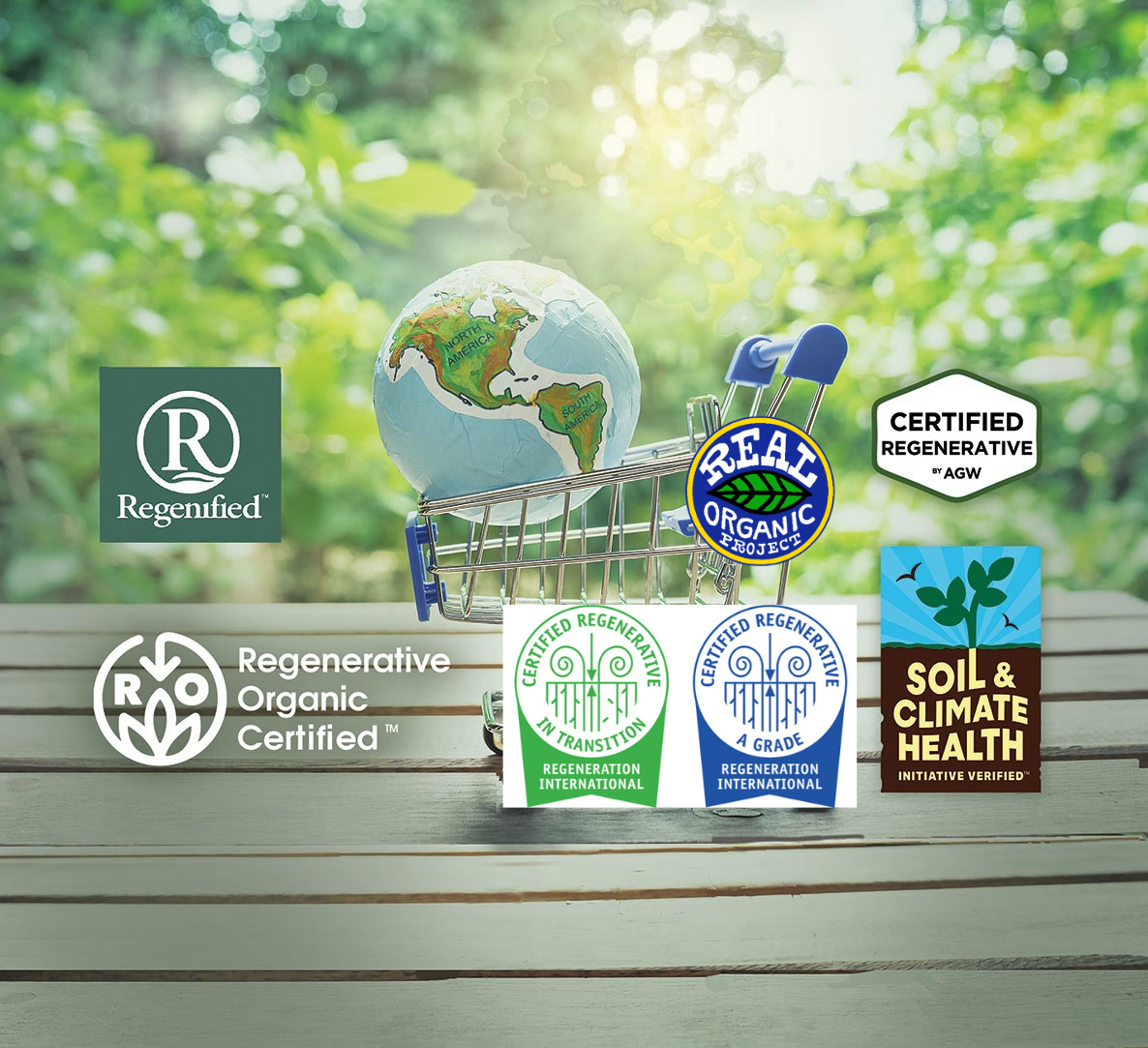
The report evaluated 10 prominent food labeling programs, finding that certifications using the term “regenerative” vary dramatically in what they actually require—and some of the most rigorous standards meeting regenerative principles don’t use the term at all. The labeling programs evaluated were: Certified Regenerative by A Greener World, Certified Regenerative by Regeneration International, Demeter Biodynamic, Rainforest Alliance Regenerative, Real Organic Project, Regenagri, Regenerative Organic Certified, Regenified, Soil & Climate Health Verified, and USDA Organic.
The report classifies the labeling programs into two categories: threshold standards and pathway standards. The former means that farming operations must meet certain thresholds in order to be certified. The latter labeling programs meet farming operations where they are and provides a pathway to certification. Certifiers of threshold standards include USDA Organic, Regenerative Organic Certified, Real Organic Project, Demeter Biodynamic, Certified Regenerative by A Greener World, Certified Regenerative by Regeneration International, and Rainforest Alliance Regenerative. Certifiers of pathway standards include Soil & Climate Health Verified, Regenagri, and Regenified.
Organic Certifications Are Most Reliable Standards
The report found wide variation in the labeling programs across three critical areas: toxic pesticide and synthetic fertilizer use, soil health practices, and standard integrity related to verification and traceability.
The report asserts that USDA Organic, and labels that build on it—Regenerative Organic Certified, and Real Organic Project—are the most reliable and enforceable standards when it comes to chemical use and soil health. The organic standard prohibits all synthetic fertilizers and more than 900 synthetic pesticides otherwise allowed in farming.
Greg Lickteig, who has operated an organic grain business for 30 years, supports organic certification.
“We have organic trade rules that our predecessors put in place that carry the force of law,” he says. “They are far from perfect but they do a good job of establishing a different way to farm that has proven effective.”
“For shoppers who care about what’s actually in their food, distinguishing which labels verify reduced use of harmful pesticides matters,” said Kendra Klein, deputy director of science at Friends of the Earth U.S. “For consumers prioritizing reduced pesticide exposure, organic is a top choice.”
Other labels that prohibit harmful pesticides are Demeter Biodynamic and Certified Regenerative by Regeneration International—Grade A. Three labels in the analysis don’t go as far but have meaningful restrictions on pesticides: Certified Regenerative by A Greener World, Rainforest Alliance Regenerative, and Soil and Climate Health Initiative Verified.
Labels that prohibit the use of genetically engineered seeds and crops are USDA Organic, Regenerative Organic Certified, Demeter Biodynamic, Certified Regenerative by Regeneration International—Grade A, Real Organic Project, Rainforest Alliance Regenerative, and Certified Regenerative by A Greener World.
Structural Integrity of Regenerative Standards Are Key
While the report is designed to help consumers make informed choices, it also recognizes that regenerative labels are of growing interest to food companies. For retailers, brands, and institutional buyers, regenerative labeling programs can be mechanisms for transforming supply chains to meet climate, biodiversity, and resilience goals. Some programs can help companies meet specific consumer demands such as food without toxic pesticide residues. Others may help companies engage a broader set of farmers and support gradual improvement over time, an approach that can be critical for scaling regenerative practices. But the report warns that regardless of a regenerative labeling program’s approach or model, structural integrity is key.
“Labels only matter if people can trust them. That trust depends on independent third-party verification to confirm that farmers are meeting the standard and strong traceability systems to ensure that the final product actually contains ingredients from those farms,” said Charlotte Vallaeys, principal at Vallaeys Consulting and one of the co-authors of the report.
At the retail level, Whole Foods Market recognizes Regenerative Organic Certified, Regenified, Ecological Outcomes Verified, Certified Regenerative by A Greener World, and Soil and Climate Initiative for regenerative claims made on products sold in the retailer’s stores.
Consumer awareness of regenerative is growing but understanding of what it is remains limited. A 2024 survey by Regenified found that 68% of values-based shoppers have heard of the term “regenerative” but only 37% of respondents understand what it is.
“We already have a national regenerative label—it’s organic”
Finally, the report asserts that the surge in regenerative labels reflects growing demand for a better food system, and highlights gaps in public policy. Current agricultural policies continue to favor conventional, chemical-intensive monocultures and factory farming. The report envisions a future in which the highest standards set by food labels become not exceptional achievements, but a baseline expectation for what our agricultural policies deliver in terms of environmental and public health, community well-being, and sustainable farmer livelihoods.
Could a national regenerative standard be developed similar to the National Organic Program? In the late 1980s, the organic industry lobbied the U.S. government to establish a national organic standard to replace conflicting state and private certification programs. Could this happen to regenerative? Some say it won’t because the term “regenerative” means different things to different farmers and food companies.
“There is such a wide range in how people define regenerative agriculture, and these are not minor differences,” Vallaeys says. “The term is currently widely used—from small organic food companies to some of the world’s largest agrochemical corporations. That level of divergence makes it difficult to imagine a politically feasible national standard that all current users of the term would support. There are also fundamental disagreements about what regenerative agriculture actually requires in practice.”
Klein says a national regenerative standard isn’t needed. “What our report makes clear is that we already have a national regenerative label—it’s organic. Developing the federal organic standard was a decade-long process engaging farmers, scientists, regulators, and advocates. Recreating that process for ‘regenerative’ could easily produce a weaker, more diluted standard than the one already codified in organic—especially now that the term ‘regenerative’ has been widely co-opted by major corporations, including pesticide companies themselves.”
Additional information supplied by Friends of the Earth.
Advertisements