By Kendra Morrison
Once only found in specialty grocers and South Asian markets in the United States, ghee has steadily emerged into the mainstream food industry. Today, the clarified butter product appears on shelves in major retailers, natural food chains, independent co-ops, and private-label grocery lines as consumers increasingly seek alternative cooking fats.
Long valued within Indian cuisine and Ayurvedic traditions, ghee has historically been used as a cooking oil and a foundational ingredient associated with digestion, nourishment, and holistic wellness practices. In recent years, those traditional uses have converged with broader American consumer interest in higher-fat diets, animal-based foods, culinary oils with higher smoke points, and products perceived as less industrially processed than many seed oils or synthetic cooking fats.
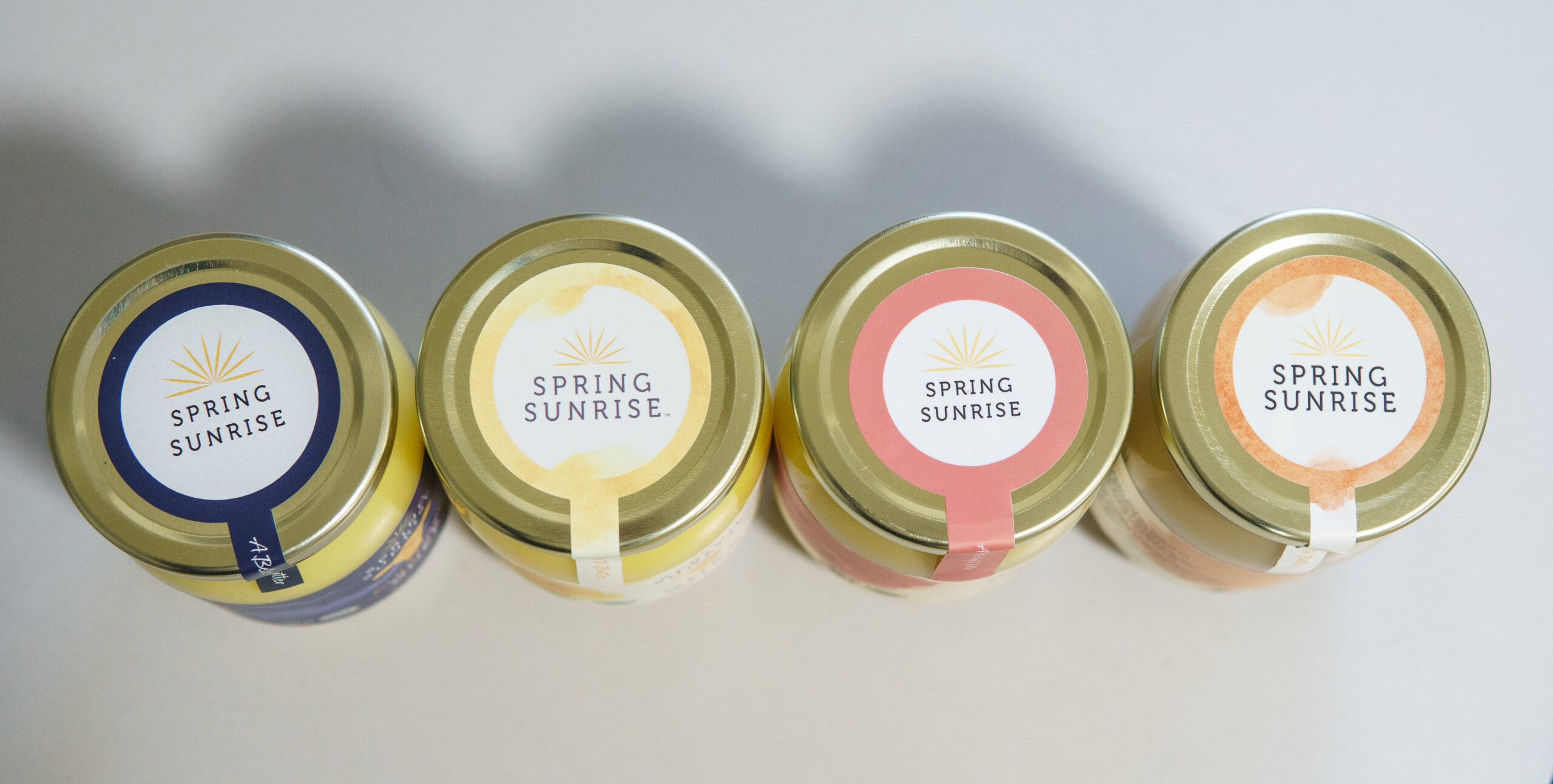
That convergence has created a rapidly expanding market opportunity for specialty producers such as Spring Sunrise, a Fairfield, Iowa-based company that has grown from a family kitchen operation into a national manufacturer supplying customers across all 50 states.
“Slowly, then all at once,” shared Donald Revolinski, describing the company’s evolution. “My father started making ghee in our home kitchen in 1992. We sold it in one store location here in Fairfield. It was only ever a side hustle for our family, but as the years went on, and particularly once Amazon started selling everything instead of just books in the early ‘00s, our customer base started to broaden.”
A major turning point came in 2017, when Spring Sunrise invested in a dedicated production facility north of Fairfield and transitioned from small-scale oven production to stainless steel kettles capable of significantly larger batches.
“We took a risk in 2017 building a facility about three miles north of town,” Donald stated. “Once batch sizes went up, we were able to onboard other brands as private labels and it became clear that our true power was as a manufacturer as well as a brand.”
Since then, the company has averaged approximately 15 percent annual growth. Spring Sunrise is now expanding into an additional 11,000-square-foot facility as demand for ghee continues increasing among both consumers and food manufacturers.
“We are having trouble keeping up with demand, so increasing our batch size in a new facility is essential for our business if we want to maintain our current trajectory,” Donald explained.
The broader ghee category has expanded alongside changing consumer attitudes toward dietary fats. Products once avoided for their saturated fat content are increasingly being reconsidered by consumers seeking traditional fats perceived as more natural or functional.
“People are searching for healthier fats in their diet, and ghee is the most refined form of butter,” Donald clarified. “There is also a massive trend in the last decade or so toward animal fats.”
Unlike conventional butter, ghee undergoes an extended cooking process that removes water and milk solids, resulting in a shelf-stable product with a high smoke point and concentrated flavor profile. Donald admitted many consumers still misunderstand the distinction between clarified butter and traditionally prepared ghee.
“Properly made ghee develops a buttery, almost caramelized flavor in the oil due to its long cook time,” he elaborated. “Ghee also has a lower moisture point than conventional butter or clarified butter so it is shelf stable even though it’s made from dairy.”
Donald noted that food manufacturers increasingly use ghee as an ingredient in packaged foods and prepared products, broadening demand beyond retail jars sold directly to consumers. At the same time, scaling within the organic dairy sector presents ongoing challenges. Donald pointed to tightening organic livestock regulations as one factor contributing to tighter milk supplies and rising costs throughout the dairy industry.
“Now cows must switch over for their entire lives and even then are not considered eligible, only their calves, who are eating organic since birth, are considered organic,” he imparted. “It’s a good thing, but does make organic milk scarce.”
Certification and traceability expectations have also become increasingly important as specialty food companies expand into national retail distribution. According to Donald, certifications such as organic and SQF require detailed documentation, sourcing verification, and accountability systems throughout production.
“These certifications give buyers confidence that the food they consume is safe for themselves and their families,” he rationalized.
Spring Sunrise has additionally maintained a commitment to minimizing plastic use throughout its packaging and shipping systems, relying primarily on glass jars and paper-based packing materials. Donald mentioned that ghee is cooked at temperatures exceeding the limits commonly recommended for many food-safe plastics. Donald added that sourcing glass domestically has also helped the company avoid some of the supply-chain volatility and geopolitical uncertainty.
As consumer demand for specialty fats continues rising, Donald sees continued opportunity for ghee within both the natural products sector and the broader food industry. For Spring Sunrise, the company’s expansion reflects the growth of a category once considered niche, and the increasing market value placed on traditional foods, traceable sourcing, and specialized manufacturing expertise.
Sources: Dimitri, C., & Nehring, R. (2022), Thirty years of organic dairy in the United States: The influences of farms, the market and the organic regulation, Renewable Agriculture and Food Systems, 37(e30), 1–14; Grand View Research, (2024), Ghee market size, share & trends analysis report (global industry outlook and forecast); United States Department of Agriculture, Agricultural Marketing Service, (2024), Organic livestock and poultry standards: Overview of requirements; United States Department of Agriculture, (2012), Organic 101: What the USDA organic label means.
Advertisements