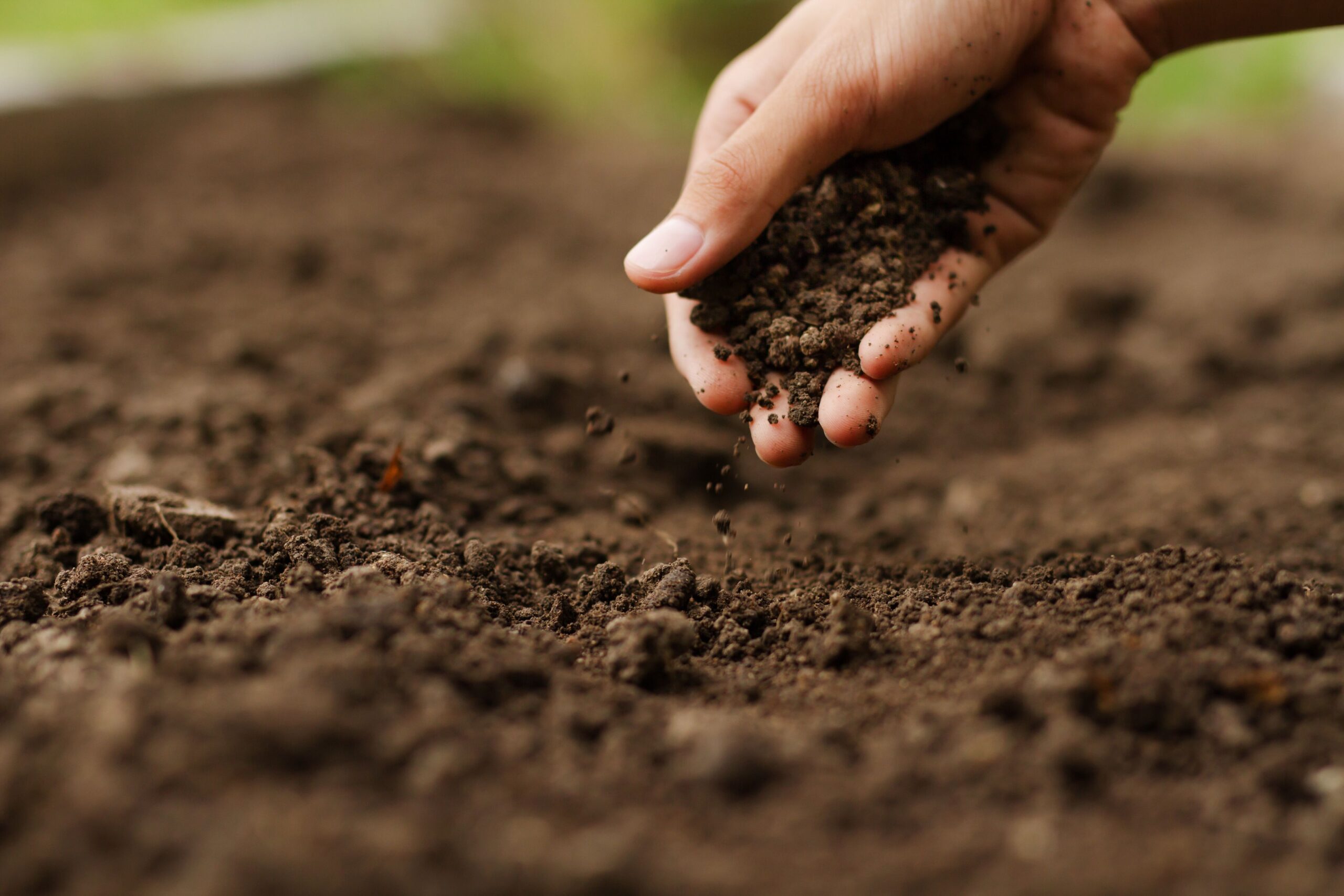
When Raul Cano, Ph.D., explains what glyphosate has done to U.S. farmland, he doesn’t speak in abstraction. He describes a quiet erosion of biology and soils losing their capacity for resilience. “Glyphosate didn’t just control weeds,” Cano said in a recent conversation. “It stripped soils of microbial diversity and blocked key micronutrients.”
Cano, a microbial ecologist and Professor Emeritus at Cal Poly, is one of the inventors named on a newly awarded U.S. patent for a microbial consortium designed to break down glyphosate and its toxic metabolite, AMPA. According to field data provided by Cano, the formulation has been tested for five years in multiple regions and achieved nearly 96 percent glyphosate reduction in a California vineyard, about 87 percent in Wisconsin corn, and measurable declines in cotton, soybeans, and organic vegetable systems.
“In every location, once residues dropped, nutrient flow improved,” he said. “Calcium, manganese, and iron became accessible again.”
Those results have impressed Don Huber, Ph.D., Professor Emeritus of Plant Pathology at Purdue, who advised on the work. “This is the first scalable biological mechanism I’ve seen that materially reverses that trend,” Huber said.
The product, commercialized as PaleoPower® by Ancient Organics Bioscience, is now used across tens of thousands of acres, according to the company, signaling that biological remediation may be shifting from experiment to strategy.
Advertisements