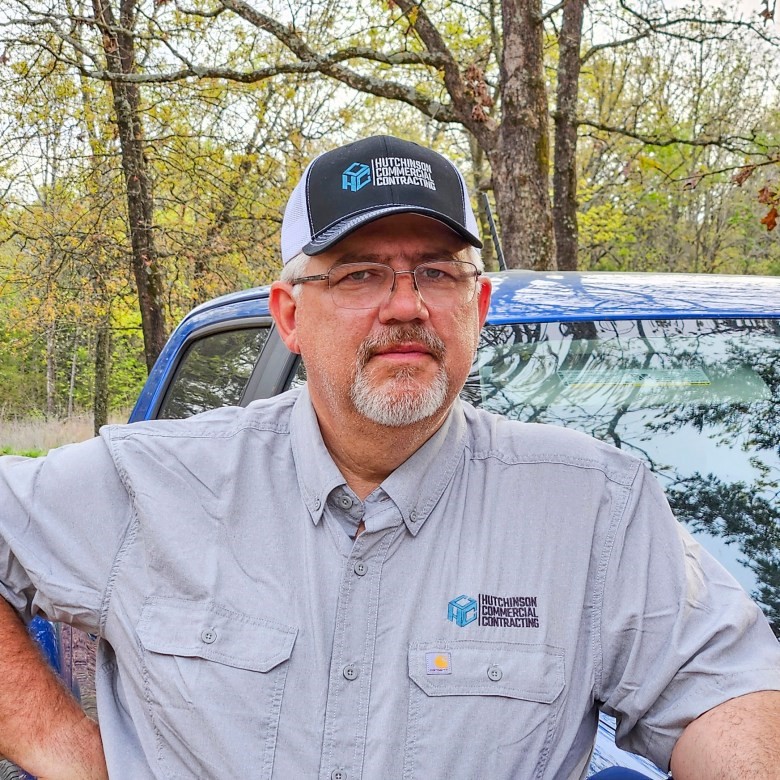

William Caplinger raises all his food pesticide-free after a Stage 4 cancer diagnosis.
by Adeleine Halsey, for Investigate Midwest
William Caplinger, a superintendent for a commercial construction company, runs an organic farm in Sulfur Springs, Arkansas, about one hour from Joplin, Missouri. He and his wife, Heather, raise all their food for consumption, completely chemical- and pesticide-free.
Caplinger has Stage 4 prostate cancer. His shift to all-natural started shortly after his diagnosis four years ago, at the age of 52. The cancer has now metastasized to his chest. Caplinger’s doctors gave him 8 to 10 years to live, but that hasn’t stopped him from seeking alternative treatments and fighting by implementing changes in every area of his life.
After losing more than five farming associates in his area over the years, and his personal experiences being exposed to farm chemicals, Caplinger is a full-fledged believer that farm chemicals cause cancer.
The Caplingers’ farming journey began in Virginia over 20 years ago, starting with small animals and then moving into farming alfalfa, a forage crop typically harvested for livestock feed and turned into hay. After taking a short break from 2001 to 2003 to be missionaries in Vienna, Austria, they returned to the United States and settled down in Arkansas. They now run a 200-acre diversified farm with 68 acres in Arkansas and 134 in Missouri.
Though he was able to get his diagnosis quickly, he said he had to travel four hours to get treatment in Oklahoma. During their first few years of farming, Caplinger used the pesticide paraquat, among others.
Some studies have found a positive association between thyroid cancer risk and paraquat exposure, as well as non-Hodgkin lymphoma. The EPA, however, classifies paraquat as a “Group E” chemical, which indicates evidence against carcinogenic associations for humans.
Regardless, Caplinger said his cancer diagnosis was a sobering awakening to the dangers of farm chemicals.
“It’s hard to tell your family that your life is gonna be shortened because of what society has put on people, and it makes it tough that way,” Caplinger said as tears ran down his face. “…not knowing if in eight years, I’ll be here to celebrate any grandkids or anything like that.”
Since the diagnosis, he and Heather decided to fully omit all chemicals from their lives. They took it as a sign to rid their lives of chemicals in every conceivable way, from pesticides to hand soap to processed foods. They try to eat foods that are whole and Amish-grown or home-grown, with no additives or preservatives.
Caplinger raises his own livestock for meat, eggs, milk and honey, including cows, pigs, chickens, ducks, quail and bees. The couple also has milk cows and grows their own vegetables without synthetic pesticides and herbicides, opting instead for natural alternatives like Epsom salt, soapy water (natural soaps), neem oil, and diatomaceous earth.
Despite all these efforts, Caplinger explained that they can only do so much to combat exposure to chemicals, due to environmental spread.
“I can homestead and not use any chemicals, but my neighboring farmer can spray all day long,” he said. “You know, wind carries. It’s not just water, it’s wind.”
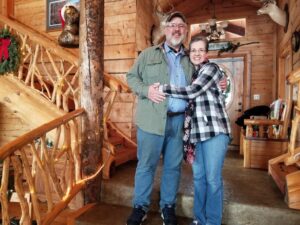
William Caplinger and his wife, Heather
Caplinger is currently in remission and taking it day by day, but says he struggles mentally with what is to come. His faith helps him stay strong in the face of the brutal symptoms, he said.
“God has kept me going and fighting. I have lost 80% of the hair on my body, and have lowered skin pigmentation, energy, libido, and the ability to sleep at night due to hot flashes.”
Resigned to “a lifetime of medicine,” he said he is doing alternative treatments to what his doctor recommended, including ivermectin and fenbendazole.
Some cancer patients in remission have turned to these alternative treatments in recent years. Ivermectin, originally an anti-parasitic drug for humans and animals, has shown potential anti-cancer effects in lab studies. One survey in Ecuador found that about 19% of cancer patients used it alongside conventional therapies. Fenbendazole, a dewormer for dogs, has also drawn attention for similar reasons, with anecdotal reports of tumor regression in some cases. Though neither drug is approved for cancer treatment, interest continues as patients seek out complementary options.
For Caplinger, the journey is about more than just survival. It’s about reclaiming a way of life that reflects his faith and values.
“God didn’t put us here to raise pesticides and everything. That’s something of science,” he said. “He’s not all about that all the time. And my eyes are focused on the fact that we can get rid of the world of pesticides. Go back to the way God intended, as the farm.”
His farm isn’t just a place to grow food. It’s a symbol of his commitment to living differently—more simply, more naturally, and with greater care for what he puts into his body and the environment. While his cancer may be in remission, his fight continues in the choices he makes every day.
“Farmers, we’re tough,” he said quietly. “But we can only hold out for so long.”
Investigate Midwest is an independent, nonprofit newsroom. Our mission is to serve the public interest by exposing dangerous and costly practices of influential agricultural corporations and institutions through in-depth and data-driven investigative journalism. Visit us online at www.investigatemidwest.org
Advertisements