Sunrise Produce partners with Greenfield Robotics to eliminate herbicides, touts “Robot-Weeded” produce at Whole Foods stores
There’s a new, unique label on sweet corn sold at some Whole Foods stores. The label reads “Robot-Weeded,” and the sweet corn was grown by Sunrise Produce, Inc. The Indiana family farm used artificial intelligence-based robotic weeders instead of toxic herbicides to eliminate weeds, a trend that is steadily spreading to other U.S. farms.
“We looked at robotic weeding as a way to connect the dots between what we’re doing on our farm with our regenerative practices and with consumers so they can see this is what we’re trying to do on the farm,” says Bill Kercher, Sunrise’s vice president of business development.
Sunrise is a family business operating since 1922. They grow a variety of vegetables on 600 acres, including sweet corn, summer and winter squash, pumpkins, broccoli, cabbage, cucumbers, peppers, eggplant, and tomatillo. The family also operates Kercher’s Sunrise Orchards, an apple orchard. Everything they grow is non-GMO.
Regenerative practices, stopped using glyphosate
In recent years, Sunrise has begun adopting regenerative farming methods such as planting cover crops on 90% of their fields and reducing tillage.
They also wanted to reduce the use of herbicides. They stopped using glyphosate herbicide seven years ago.
“Glyphosate can tie up a lot of the key aminos that plants need for a healthy immune system,” Kercher says. “We made the conscious decision to cut that out, and we’ve seen a lot of really good results from doing that.”
In particular, Sunrise wanted to eliminate herbicides used after weeds start to sprout, known as post-emergent herbicides, in sweet corn. They found that such herbicides decrease sweet corn yields.
Looking for an alternative to herbicides, they contacted Kansas-based Greenfield Robotics, which has been manufacturing robotic weeders called BOTONY™ Autonomous Robots since 2018.
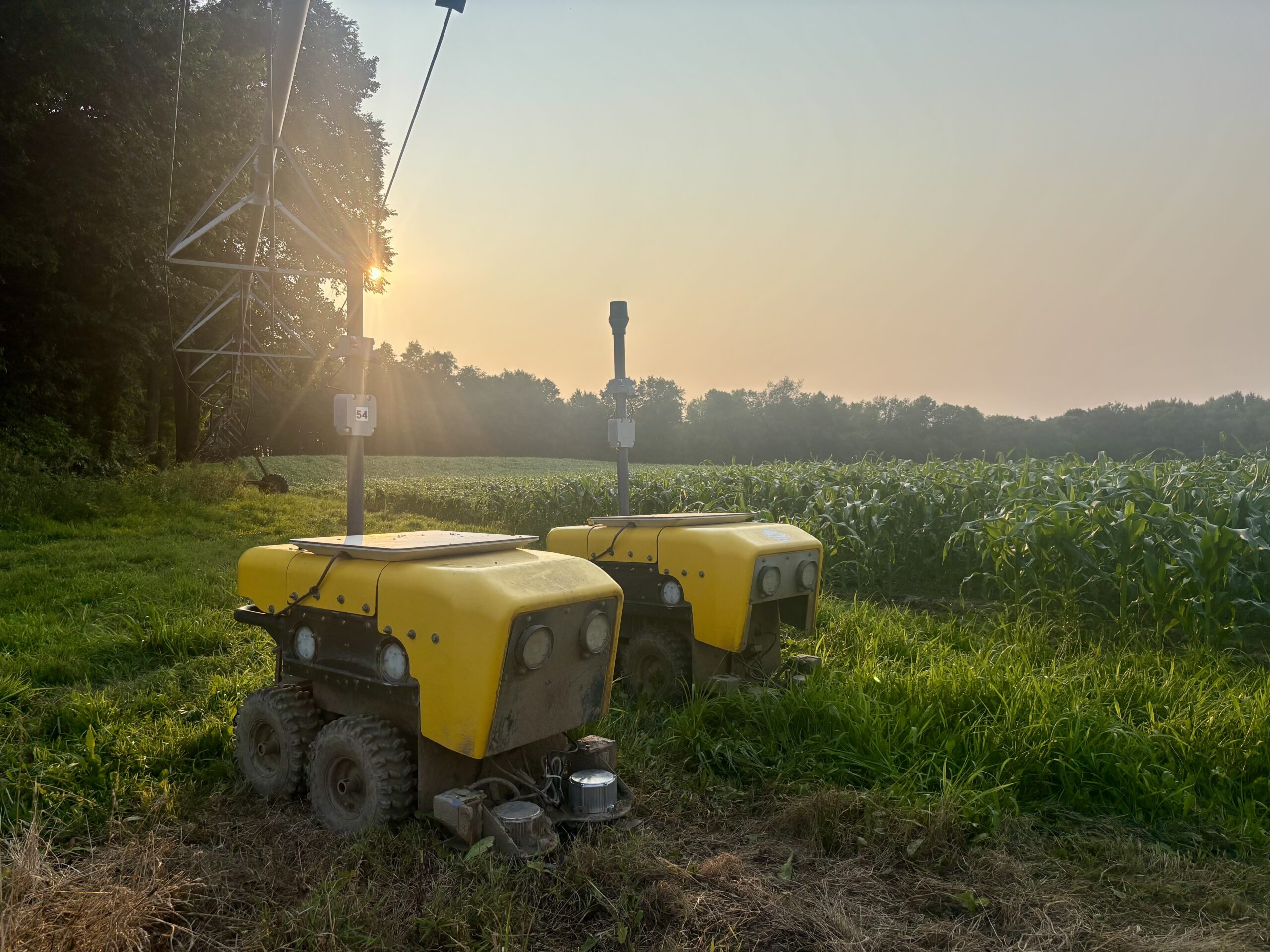
The small (3’ high by 24” wide) robotic weeders or “weed bots” travel down rows between crops and cut weeds to about one-half inch using spinning blades.
Kercher says deciding to use the robotic weeders was a “no-brainer.” “That’s the way we looked at it with the direction we were trying to go with our farm to reduce any chemicals that we can and to improve good microbes in the soil. It just made sense to us,” he says.
Kercher also liked Greenfield’s commitment to regenerative agriculture. “When we saw what Greenfield was presenting; they’re really touting regenerative agriculture at scale.”
“The bots do what they’re meant to do”
Greenfield’s founder and CEO Clint Brauer shares a similar commitment to eliminating herbicides. His father suffered from Parkinson’s disease, which Clint attributes to his exposure to pesticides.
The robots have mostly been used on field crops such as corn and soybeans, and Brauer was excited to use them on Sunrise’s food crops.
“We want to get chemicals out period, and it means a lot when what they’re working on is going to end up on a dinner plate,” he says.
Sunrise used two robots on their sweet corn, pumpkins, and squash, about two hundred acres total, according to Brauer.
The pumpkins presented a bit of a challenge because the fields weren’t tilled, making them uneven. As a result, the robot blades could hit lumps of soil. Going forward, Brauer says the newer robots will have tracks, think tank tracks, instead of wheels, which will help them respond better to uneven ground.
Kercher says Greenfield and the robots responded well to the challenges presented to them. “We’ve thrown them some unique challenges with our farm, and they’ve handled them,” he says.
Sunrise saw several benefits from using the robots. Because they weren’t using post-emergent herbicides, which can reduce crop yields, sweet corn yields increased. In the past, Sunrise employees hoed weeds by hand but the robots reduced that by 50-60%, according to Kercher.
“We’re able to get a lot more done during the day because our employees didn’t have to hoe between the rows,” he says.
Cutting weeds in the pumpkin fields also created mulch for the pumpkins to lay on, which reduced the scarring that results when pumpkins lay on bare ground.
“The quality of the pumpkins is better when they are not laying in the dirt,” Kercher says.
Kercher was happy with how the robots performed on his fields. “The robots do what they’re mean to do. They cut weeds in the fields. They worked great,” he says.
Brauer likewise enjoyed working with Sunrise. “That is a great family to work with, and they’re really trying to do things in a good way.”
Sunrise plans to expand the use of the robots going forward. “I think we’re really just getting started,” Kercher says. “As we continue to help Greenfield and they continue to help us, there’s real potential that the robots will be working more and more autonomously in the field.”
The next generation of Greenfield’s autonomous robots will also have a foliar feeding feature so Sunrise can apply targeted micronutrients to enhance the health of the plants and their nutritional value.
Robot-Weeded label
Sunrise was so happy with the robots that they decided to label their sweet corn as “Robot-Weeded” with an image of a robot. The label is featured on their Sunrise Select brand sweet corn sold in Whole Foods stores.
“We definitely thought that Whole Foods’ customers would appreciate the label,” Kercher says. “The label is meant to educate consumers and connect the dots between what we’re doing on the farm and what’s on their plate.”
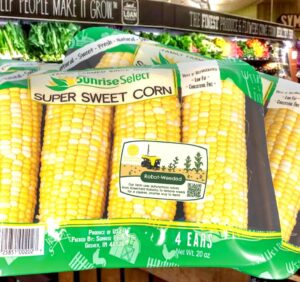
Sunrise Produce sweet corn sold in Whole Food Stores features “Robot-Weeded” label
Reaction to the label has been positive with customers praising the use of the robots on social media. Some customers have even said they want to invest in Greenfield Robotics.
In fact, Clint Brauer’s goal—to eliminate herbicides—is attracting interest and investment money. In 2023, Chipotle Mexican Grill invested in Greenfield through their $50 million Cultivate Next fund.
Greenfield continues improve the robot technology, enhancing and expanding their capabilities. They are now used on farms in six states on crops such as corn, soybeans, sorghum, sunflowers, and cotton, and now on sweet corn, pumpkins, and squash. Some organic farmers are also using them.
“They just keep getting better,” Brauer says.
Ultimately, Brauer wants to develop robots than can handle a field from beginning to end—from planting seeds and cover crops to weeding and foliar feeding.
The main goal remains to eliminate the toxic chemicals. “Our next focus is to do all those things and get rid of herbicides,” Brauer says.
Advertisements