
Buckwheat Gains New Market Opportunities as Food Companies Explore Its Potential
Efforts to expand buckwheat production are gaining momentum as organic farmers, food companies, and processors work to develop new markets for a crop valued for both its agricultural benefits and nutritional potential. Once a more common food crop in the United States, buckwheat has increasingly been used as a cover crop, but new product development and research could help create additional commercial opportunities for growers.
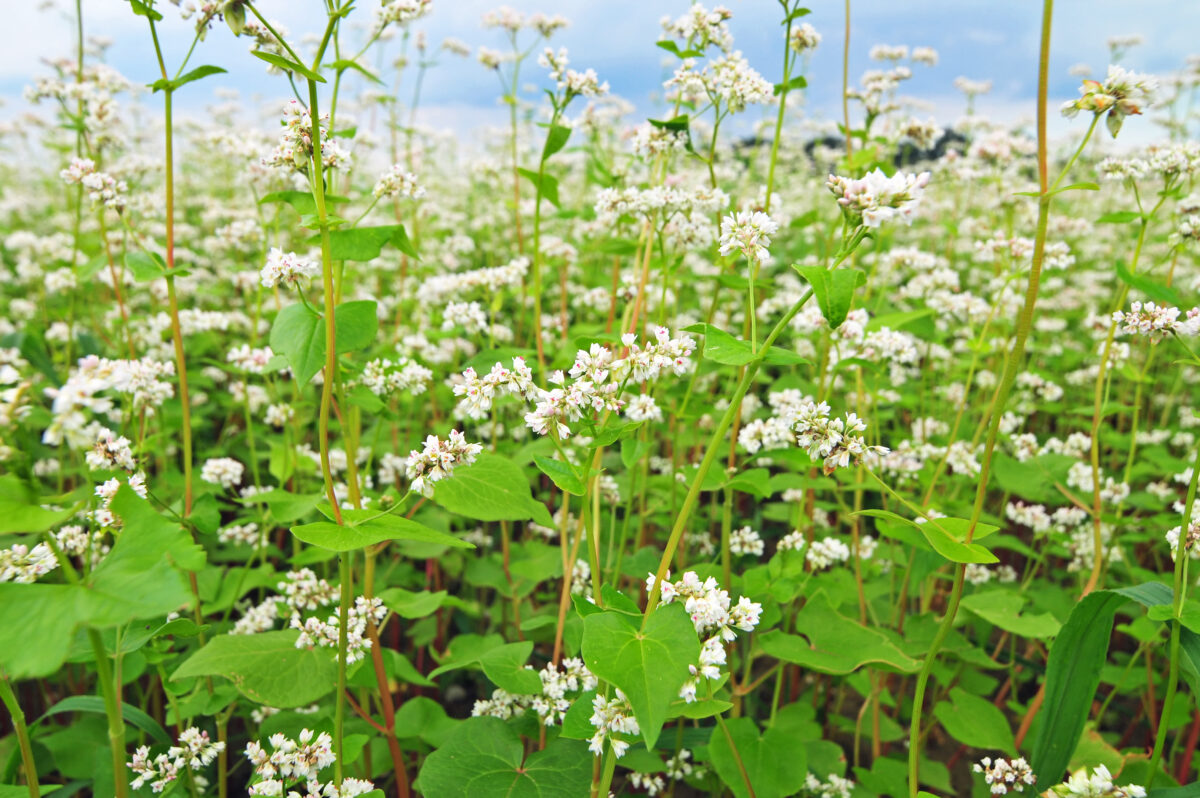
An October 7, 2026, Associated Press report highlighted several efforts to expand buckwheat’s role in the food supply. Among them is a new buckwheat-based milk developed by food entrepreneur Paige Hansen in partnership with New Barn Organics. The product is launching in Whole Foods Market locations, while a powdered version is being developed for use in snacks, crackers, confections, and other food products. The expansion has enabled Hansen to triple the amount of buckwheat she purchases from farmers.
Buckwheat offers several agronomic advantages for organic production. Its rapid growth and dense canopy help suppress weeds, while its flowers provide resources for pollinators. Its relatively short growing cycle, generally 10 to 12 weeks for seed production, also allows it to fit between other crops in a rotation. A 2024 study published in Crop Protection found that buckwheat performed particularly well among six summer cover crop species for biomass production and weed suppression, while supporting honeybees and hoverflies.
Despite these benefits, expanding production as a food crop presents challenges. Buckwheat does not ripen uniformly, making harvest more complicated and often requiring additional equipment to cut and dry plants before threshing. Limited processing infrastructure and dependable markets have also constrained production.
In New York, The Birkett Mills is working to address the market challenge by supplying farmers with seed and purchasing their harvested buckwheat at a fixed price. The mill, which has processed buckwheat for more than two centuries, reports increasing demand and expanded processing activity.
Research is also underway to improve the crop’s commercial potential. A USDA-funded Washington State University project, More Bang for Your Buckwheat, is developing varieties with improved yields, nutritional characteristics, and agronomic performance while evaluating their benefits in organic cropping systems.
Sources:
Bickel, Joshua A. 2026. “Enthusiasts Hope the Organic Farm Staple Buckwheat Can Reach More Fields and Tables.” Associated Press, October 7, 2026.
Vieites-Álvarez, Y., Reigosa, M. J., and Sánchez-Moreiras, A. M. 2024. “A Decade of Advances in the Study of Buckwheat for Organic Farming and Agroecology (2013–2023).” Frontiers in Plant Science, 15:1354672. DOI: 10.3389/fpls.2024.1354672.
U.S. Department of Agriculture, National Institute of Food and Agriculture. 2024–2028. More Bang for Your Buckwheat. Project No. WNP00992.