
By Ken Roseboro
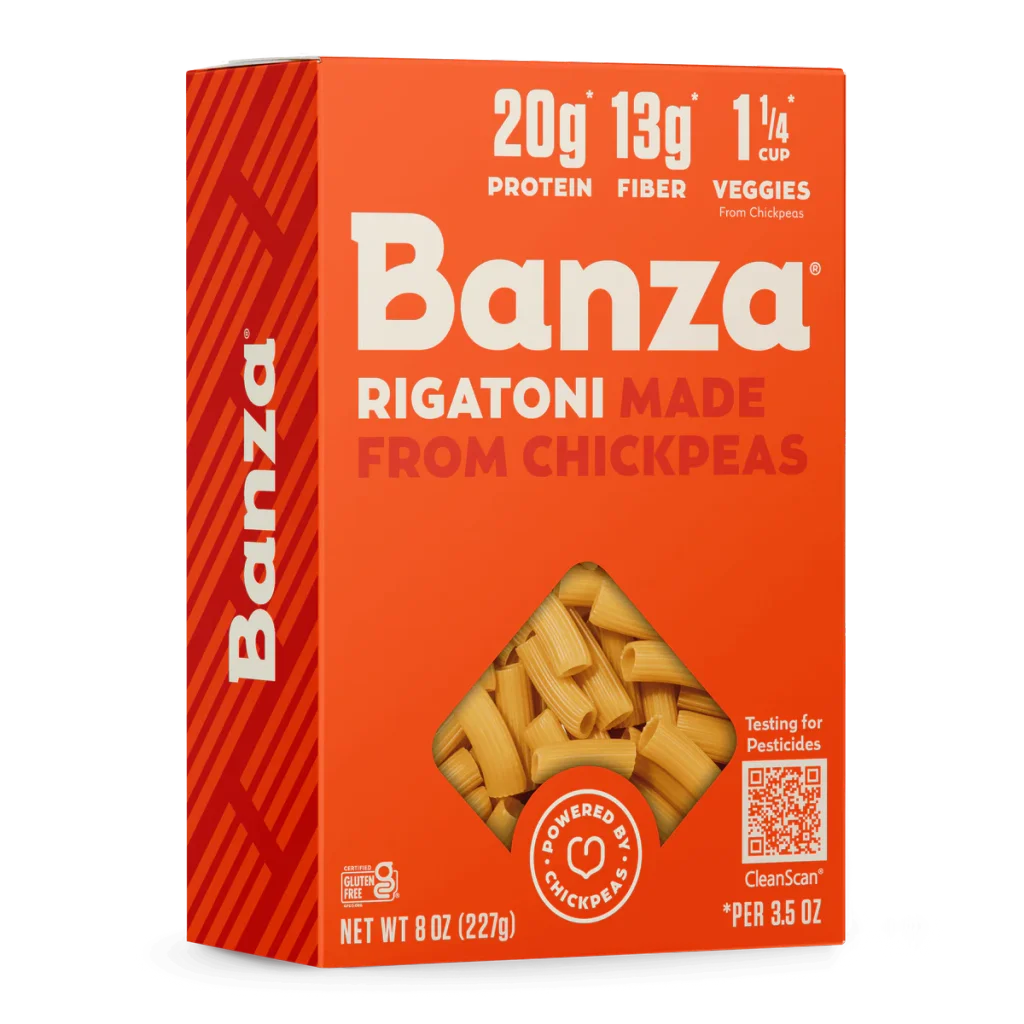
Chickpea manufacturer Banza recently reported that they have achieved a verified 543-fold reduction in glyphosate residues in its chickpea pasta line—dropping from an average of 2,836 parts per billion (ppb) to just less than 10 ppb in approximately one year. These new levels are considered non-detectable by most laboratories and are on par with the cleanest organic products on the market.
The results come from independent testing of 18 retail-purchased samples, conducted in partnership with Moms Across America and analyzed by two laboratories: Health Research Institute Laboratories and Genista Biosciences laboratory. The highest individual sample (10.29 ppb) was still 275 times lower than the original findings; when cooked according to package instructions, glyphosate in that sample became undetectable.
Glyphosate is the most widely used herbicide in the United States. A growing body of research has documented negative health effects from exposure to glyphosate.
Zen Honeycutt of Moms Across America praised Banza’s findings. “Banza has demonstrated in the clearest possible terms that significant reductions in pesticide residues are not theoretical—they are achievable in practice, on a commercial scale, in about a year, at no extra cost to families, and without any compromise on taste or quality,” she says. “Banza’s example shows that brands that lead with accountability and action can strengthen consumer trust while improving public health outcomes.”
Moms Across America says Banza’s achievement is concrete proof that food companies across categories—pasta, grains, legumes, snacks, cereals, hummus, and more—can rapidly clean up their supply chains, respond to consumer concerns with measurable results, and do so without raising prices or sacrificing the taste and texture people expect.
Banza earned The Detox Project’s CleanScan Certification, which requires independent, ISO-accredited laboratory testing showing non-detectable levels of glyphosate and more than 400 pesticides on the finished product. Consumers can scan a QR code on Banza packaging to access ongoing, transparent test results.