
The Paradox of the Organic
Seed System
Building a reliable supply will require shared responsibility from breeders, growers, buyers and policymakers.
The risk of making the first move.
A food manufacturer needs a particular variety of organic corn to meet its processing specifications. An organic farmer is contracted to grow it, but the variety is not available as certified organic seed. The farmer must either find an acceptable alternative, navigate the commercial availability exception under organic regulations, or risk losing the contract. Meanwhile, an organic seed producer may be reluctant to multiply that variety without a dependable buyer, and a plant breeder has little incentive to invest years developing new genetics without a viable market.
Each participant is responding to a different economic reality, but together they reveal a fundamental weakness in the organic supply chain. The industry needs more suitable organic seed, yet the demand, investment, and production infrastructure necessary to supply it remain disconnected.
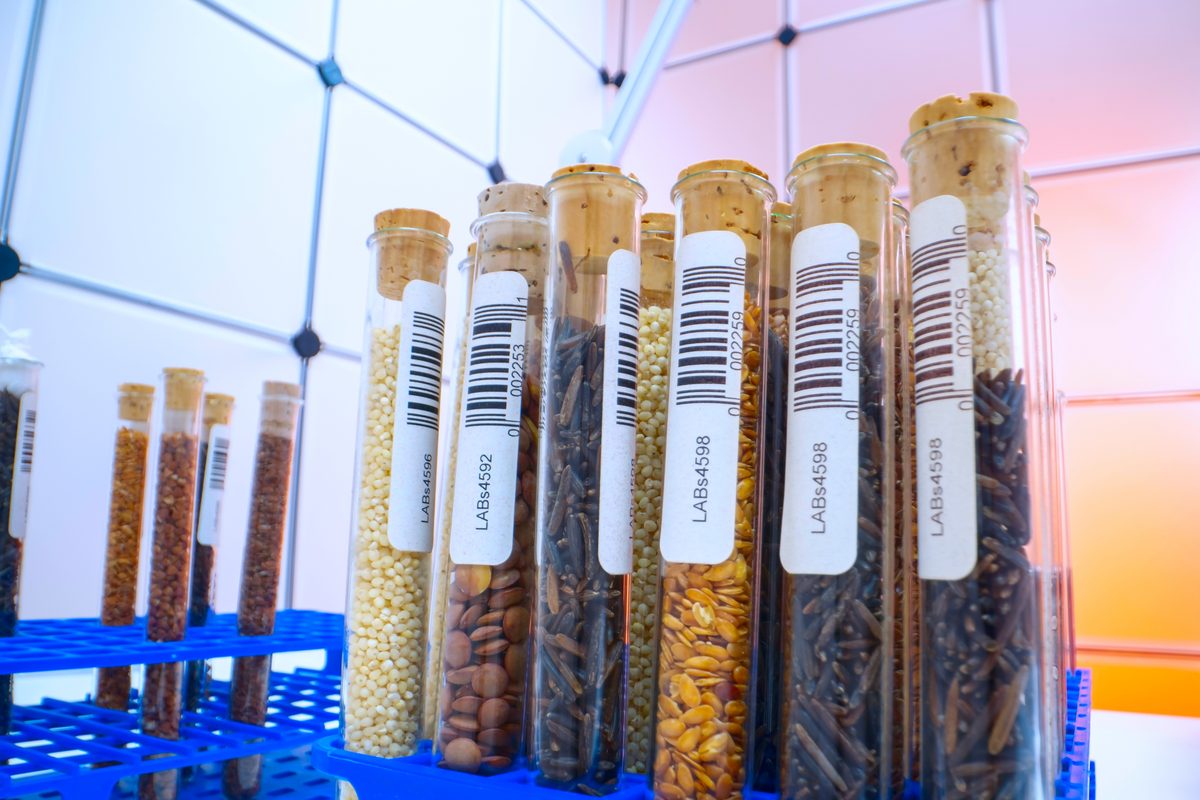
This chicken-and-egg dilemma is receiving renewed attention from the National Organic Standards Board (NOSB). Its Fall 2026 discussion document, Consistency in Organic Seed Use, examines persistent barriers to organic seed adoption and proposes changes that would extend responsibility for seed sourcing beyond individual farmers.
The Gap Between Organic Requirements and Availability
Under USDA organic regulations, certified crop producers must use organically grown seeds, annual seedlings, and planting stock. Nonorganically produced, untreated seed may be used when an equivalent organic variety is not commercially available. Commercial availability is determined by whether seed can be obtained in the appropriate form, quality, or quantity to fulfill an essential function in organic production.
The exception recognizes that organic seed supplies do not always meet farmers’ production requirements. However, determining whether an equivalent variety is available can be complicated. A variety may exist organically but lack the disease resistance, maturity window, regional adaptation, processing characteristics, or quantity needed for a particular operation.
The NOSB’s Fall 2026 document identifies conflicting availability reports across crops and regions. Stakeholder comments cited shortages or limited options for specialty varieties, food-grade corn, white and blue corn, carrots, spinach, sorghum, pasture grasses, dry edible beans, chickpeas, and other crops. Some varieties were reportedly available in certain markets but difficult to obtain in commercially useful quantities.
Research published in the Policy Studies Journal in March 2026 provides additional perspective. Liza Wood, Jared Zystro, Kristina Hubbard, and Francesca Pia Vantaggiato analyzed three rounds of surveys of U.S. certified organic growers conducted in 2010, 2015, and 2020. The average proportion of organic acreage planted with organic seed increased from 57% to 70% over that period. However, only 25% of respondents reported planting 100% organic seed in 2020.
The study found that availability of specific organic varieties was the most significant sourcing limitation. Insufficient quantity and desirable genetic traits were additional barriers.
When Buyers Choose the Seed
One of the most consequential issues identified by the NOSB involves contract production, where processors, handlers, or food manufacturers specify the varieties farmers must grow.
In these arrangements, the buyer may determine the genetics, while the farmer remains responsible for documenting organic seed sourcing. This creates an accountability gap when the required variety is not available organically.
The NOSB proposes updating USDA National Organic Program (NOP) Guidance 5029 to clarify that handlers contracting for specific varieties should address organic seed use and commercial availability in their own Organic System Plans. It also recommends better communication between certifiers when sourcing decisions involves multiple businesses.
These are proposed guidance changes, not adopted regulatory requirements.
The 2026 Wood et al. study reinforces the importance of this issue. Its survey specifically examined buyer requirements as one factor affecting growers’ ability to purchase organic seed.
Protecting Genetics and Maintaining Organic Integrity
Organic agriculture also depends on maintaining access to suitable genetics while protecting seed integrity.
The presence of genetically engineered crops in conventional agriculture creates ongoing concerns about unintended genetic contamination through pollen movement, as well as physical commingling during harvesting, handling, storage, and distribution.The NOSB’s Fall 2026 discussion document specifically identifies concerns about drift and contamination from genetically engineered crops, as well as the difficulty of identifying seeds developed using newer technologies that may constitute excluded methods.
Access to genetics presents another concern.
USDA Economic Research Service researchers Keith Fuglie and James MacDonald examined these issues in their 2023 analysis, Expanded Intellectual Property Protections for Crop Seeds Increase Innovation and Market Power for Companies. They found that Bayer and Corteva accounted for 72% of planted U.S. corn acres and 66% of soybean acres during 2018–2020.
The researchers also documented how expanded intellectual property protections encouraged private investment in breeding and biotechnology. At the same time, utility patents can restrict both farmer seed saving and the ability of other breeders to use patented varieties in further research without licensing agreements.
These figures describe conventional U.S. crop seed markets, not the organic seed sector specifically. Still, they illustrate the broader environment in which independent organic breeders must operate.
The Economics of Producing Organic Seed
Even when demand exists, producing organic seed is not simply a matter of growing more acreage. Production risks can be substantial, and seed yields are not always predictable.
A shortage of research-based production information adds to the uncertainty.
The Organic Seed Alliance is leading the four-year, $3.4 million Organic Seed Production Research on Economics and Yield (OSPREY) project, funded through USDA’s Organic Agriculture Research and Extension Initiative. Working with university and farm partners, the project is studying broccoli, lettuce, squash, and tomato seed production across multiple locations.
Oregon State University researchers involved in the project have identified significant gaps in information about irrigation, seed yields, and production practices. The research aims to combine university trials with data contributed by working growers to develop a publicly accessible seed-yield database and economic decision-making tools.
This work addresses a fundamental business problem. Without reliable information about expected yields, production costs, and management requirements, farmers have difficulty determining whether commercial seed production offers a competitive return.
Infrastructure is a persistent constraint. The NOSB documents stakeholder concerns about insufficient dedicated organic seed storage capacity, while identifying pest pressure, weed management, and isolation requirements as barriers to production.
Breaking the Chicken-and-Egg Cycle
Solving the supply problem requires connecting seed production with the markets that ultimately depend on it.
The NOSB’s proposed guidance updates include encouraging earlier seed searches, advance contracting, shared orders among growers, and variety trials. These measures could improve planning and provide seed producers with more dependable purchasing signals.
Still, broader commercial coordination is needed.
Food manufacturers and processors could communicate future variety requirements earlier, allowing breeders and seed producers to plan multiplication around anticipated demand. Multi-year purchasing agreements could reduce uncertainty for seed growers, while buyers could consider contributing to the development of varieties that meet their specifications.
Public research institutions also have a role. USDA’s Organic Agriculture Research and Extension Initiative identifies development of new seed varieties particularly suited to organic agriculture as one of its eight legislatively defined goals. Its FY2026 funding opportunities included an estimated $66 million in total program funding across the initiative’s three funding categories.
This provides an existing mechanism for supporting breeding, production research, and farmer education. However, funding research alone does not guarantee that successful varieties will reach commercial production. Multiplication, processing, distribution, and market adoption must also be addressed.
An international example comes from the European Union-funded LIVESEEDING project, which brought together 37 organizations across 16 countries through 17 regional Living Labs. Its approach combines three priorities: increasing market demand, expanding the supply of suitable organic seed, and creating supportive policy conditions.
Building Capacity, Not Just Enforcing Compliance
The immediate regulatory discussion is important, but it cannot resolve every structural weakness in organic seed production.
The NOSB acknowledges that its proposed guidance changes alone will not dramatically or immediately increase organic seed use.
The 2026 Policy Studies Journal research offers another important consideration. Growers with limited access to organic seed but a strong commitment to organic integrity demonstrated greater compliance than growers facing similar sourcing constraints with lower commitment. The authors conclude that regulatory systems must balance flexibility with accountability while recognizing differences in producers’ ability to comply.
A more resilient system would connect public breeding and genetic resources with independent breeders, regional seed producers, farmer-led trials, and commercial buyers. It would also improve access to production data, seed-cleaning and storage infrastructure, genetic verification, and transparent information about available varieties and quantities.
The question of who pays remains central. Farmers and independent seed producers cannot reasonably carry the entire cost of developing an agricultural resource that benefits processors, manufacturers, retailers, and the broader organic market.
Buyers have an economic interest in reliable supplies of the varieties they require. Public institutions have an interest in maintaining genetic diversity, agricultural resilience, and research capacity. Seed companies have an interest in developing commercially viable products. Each has a role in making the system work.