
Biotechnology Is the New GMO:
How GMWatch Is Challenging the Rules
As governments reshape agricultural biotechnology regulations, advocacy organizations are challenging the balance of influence among industry, policymakers and the public.
Agricultural innovation is often presented as a question of what science can accomplish. But as gene-editing technologies advance, another question is becoming increasingly important: who decides how those technologies enter the food system, and who has access to the information needed to make informed decisions?
As regulatory frameworks evolve, advocacy organizations are working to ensure that farmers, food businesses and consumers retain a voice in decisions increasingly shaped by scientific, political and commercial interests.
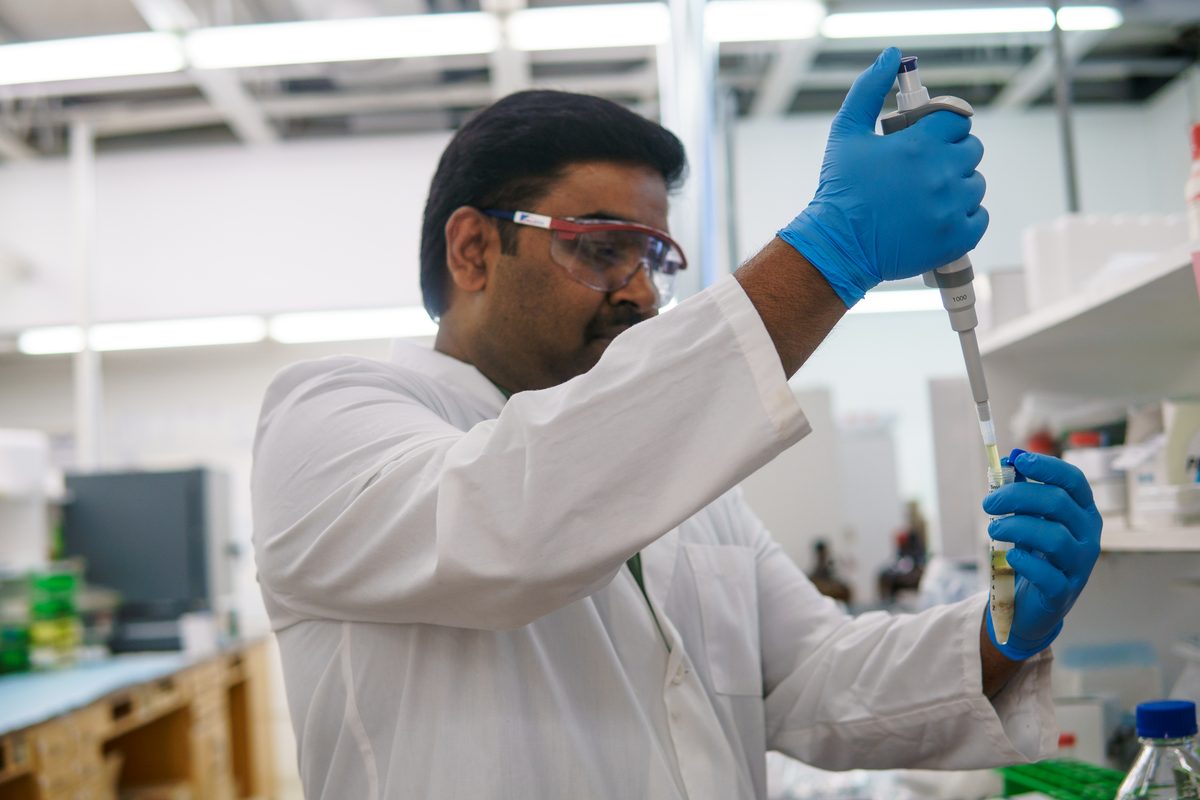
Claire Robinson, co-director of GMWatch, an organization founded in 1998 to scrutinize developments surrounding genetic engineering, has spent decades examining the scientific claims, industry influence and policy decisions shaping agricultural biotechnology. Her perspective reflects a central challenge facing organic and non-GMO agriculture. Technological change does not happen independently of the political and commercial systems that determine how it is introduced and regulated.
Robinson believes one of the biggest changes in recent years has been the growing distance between public expectations and government decisions.
“The most important change is the way governments have insulated themselves from public opinion and scientific reality on GMOs,” she explains.
Her criticism centers on the weakening of regulatory requirements for newer gene-edited crops, particularly risk assessment, traceability and labeling. These changes, she argues, threaten the ability of organic and non-GMO businesses to verify what enters their supply chains.
The Transparency Challenge
The European Union’s adoption of Regulation (EU) 2026/1388 illustrates the regulatory shift. The framework establishes two categories of plants produced through new genomic techniques (NGTs), including targeted mutagenesis and cisgenesis.
Category 1 plants that meet defined equivalence criteria with conventional breeding will be exempt from most GMO-specific risk assessment, authorization and food labeling requirements. Their seeds and other reproductive material must still be labeled, and qualifying varieties will appear in a public database. Category 2 plants will remain subject to GMO authorization, risk assessment, labeling and traceability requirements. Both categories remain prohibited in organic production.
Although the regulation entered into force in July 2026, its main provisions will not apply until July 17, 2028. Until then, existing EU GMO rules continue to govern these plants.
The distinction raises practical questions. Seed labeling and public databases provide some transparency, but the absence of GMO-specific labeling on Category 1 food products could make it more difficult for manufacturers and buyers to verify ingredients against non-GMO sourcing specifications.
Robinson identifies another obstacle: access to detection methods.
“We know that developers have these methods available in-house, or they would not be able to protect their patents,” she confirms. “Why can’t the rest of us verify the GMO or non-GMO status of these foods?”
The issue is technically complicated. Some gene-editing changes are small enough to occur naturally or through conventional breeding, making it difficult to establish their origin through testing alone. Nevertheless, access to validated detection methods and relevant genetic information can be important for identifying specific modifications and supporting regulatory compliance.
Without adequate disclosure and testing resources, independent laboratories and food businesses may have fewer ways to verify the status of ingredients, particularly when developers do not make relevant information available.
Challenging the Claims Behind Policy
GMWatch’s approach to biotechnology policy extends beyond opposing particular regulations. Robinson says the organization has developed its perspective through decades of examining recurring industry claims and comparing promised benefits with real-world outcomes.
“We’ve become familiar with the important and recurring industry lobbying narratives,” she shares, noting that these narratives can influence how governments regulate GMOs and how decision-makers approach new technologies.
She emphasizes the importance of examining the history of agricultural biotechnology rather than evaluating each new development in isolation.
“Those who ignore history are destined to repeat its mistakes,” Robinson affirms.
As examples, she points to herbicide-tolerant crops and insect-resistant Bt crops. Herbicide-resistant weeds and Bt-resistant insect populations have emerged as significant management challenges in areas where these technologies are widely used. Robinson argues that these outcomes demonstrate why agricultural innovations must be evaluated for their longer-term effects on farming systems, not simply their intended benefits.
GMWatch says it relies on peer-reviewed research, government and university reports, civil society organizations and farmers’ experiences to evaluate biotechnology claims. Its work includes technical articles, educational materials and advice to policymakers, journalists, researchers and campaigners.
Robinson acknowledges that some of the organization’s technical articles may be difficult for general audiences, but says they are among its most popular website content.
When Advocacy Reaches the Courts
Public education and technical analysis are only part of advocacy’s influence. Legal challenges provide another avenue for organizations to question regulatory decisions and require agencies to reconsider how policies are implemented.
In October 2025, the Ninth Circuit Court of Appeals ruled against portions of the USDA’s National Bioengineered Food Disclosure Standard. The court found that USDA had improperly excluded certain highly refined foods containing modified genetic material when that material was not detectable through the agency’s testing standard. It also addressed the use of digital QR-code and text-message disclosures.
The case involved Natural Grocers, other retailers and advocacy organizations, including the Center for Food Safety. The plaintiffs argued that the disclosure rules weakened the public’s ability to know whether foods were produced using genetic engineering.
Following the appeals court decision, a federal district court issued a remedy order on August 3, 2026, directing that the challenged provisions be vacated effective January 1, 2028. USDA must revise the regulations before that deadline.
The distinction between genetic material being present and being detectable is particularly important for highly refined ingredients such as corn and soybean oils. Under the previous rule, manufacturers could avoid disclosure when modified genetic material was not detectable in the finished product. The court rejected that approach under the existing statutory framework.
Robinson says GMWatch has also contributed to government consultations and court cases.
“We can’t claim success in preventing the widespread deregulation of these technologies,” she admits. “But we can claim to have helped raise awareness globally.”
The Stakes Extend to Seed Access
For Robinson, transparency is not the only concern. Intellectual property rights and access to plant genetic resources also affect the future of organic and non-GMO agriculture.
She argues that patents covering conventionally bred traits can restrict the ability of independent breeders and farmers to access useful genetic material. Although patent rules differ across jurisdictions, she warns that legal loopholes and expanding intellectual property claims can create barriers for smaller breeding programs.
The EU’s new NGT regulation includes provisions intended to address patent concerns, including greater disclosure of patent information, development of a code of conduct on licensing and monitoring of the effects of patents on breeders and farmers. Whether these measures provide sufficient access will depend on implementation and enforcement.
Robinson points to No Patents on Seeds! in Europe and the Open Source Seed Initiative in the United States as organizations working to protect access to plant genetic resources.
The issue has implications beyond ownership. Restricted access to breeding material can limit the ability of independent programs to develop varieties suited to specific production systems, including organic farming. As seed markets become increasingly concentrated, maintaining independent breeding capacity becomes an important consideration for long-term agricultural diversity.
What Meaningful Progress Requires
Robinson believes farmers, food businesses, retailers and consumers have a larger role to play in shaping biotechnology policy than they may realize. She is particularly concerned about the reluctance of some supply-chain participants to speak publicly about genetic engineering.
“On this issue, there is an epidemic of silence,” she reveals, arguing that the lack of engagement threatens organic and non-GMO plant breeding, farming and food supply.
Her proposed solution is “total transparency on all GMO-related issues,” including seed-to-fork labeling of genetically modified and gene-edited products, disclosure of where genetically engineered crops are grown, and publicly available detection methods as a condition of market release.
“The public and civil society organisations have won major victories, with even the US, contrary to previous practice, now requiring labelling of GMO ingredients and more recently, being forced by a court decision to mandate labelling of GMO derivatives like corn and soy oil. The US government is dragging its feet over implementing that ruling, but at least it’s been set in motion. That shows that even bad government policies can be reversed, but it takes time, effort, money and support from the public,” she clarifies.
The future of agricultural biotechnology hinges on accountability and public participation.
Sources:
EU Regulation 2026/1388. Official legislative text.
EUR-Lex
European Commission: EU Legislation on New Genomic Techniques. Regulatory timeline and implementation.
European Commission
European Commission: Questions and Answers on New Genomic Techniques. Patent and licensing provisions.
European Commission
Federal Court Sets January 2028 Deadline for Changes to Key Elements of Bioengineered Food Disclosure Regulations. Hogan Lovells, 2026.
www.hlc.com
Ninth Circuit GMO Labeling Decision. Center for Food Safety, October 31, 2025.
Center for Food Safety