
The IP Systems Behind a More Specialized Supply Chain
Identity preservation is hardly a new concept in agriculture. Long before supply chains began talking about traceability, differentiated attributes, or increasingly specific sourcing requirements, growers and handlers were separating crops because someone, somewhere, needed to know exactly what they were buying.
What has changed is the number of reasons to preserve identity, and the number of systems being used to demonstrate that the identity has been maintained.
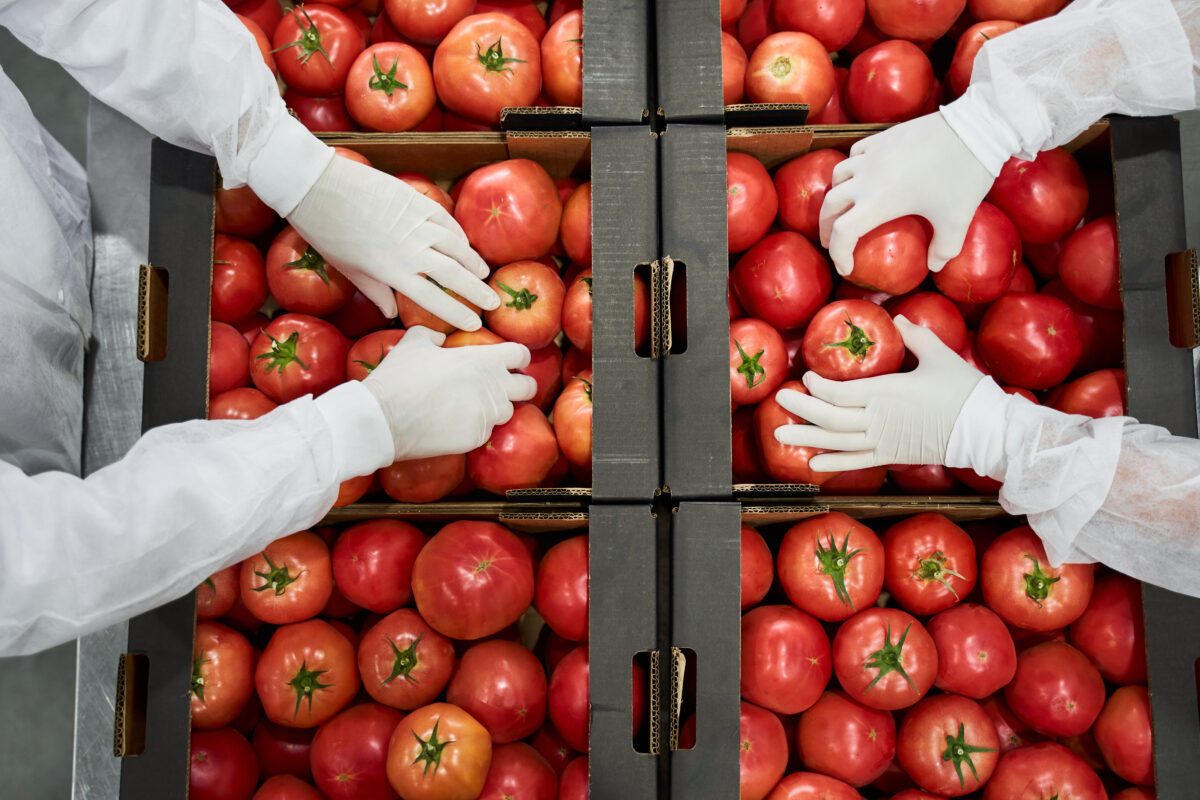
An identity-preserved crop may be grown to maintain a particular variety, genetic trait, physical characteristic, geographic origin, non-GMO status, processing quality, or other specification defined by the end user. The methods used to protect that identity can involve seed controls, field inspections, segregation, testing, documentation, chain of custody, audits, certification, or combinations of these.
For buyers, that creates a practical distinction that is easy to overlook. A product being described as identity preserved does not necessarily tell them how its identity was preserved, what was verified, or how far through the supply chain the controls extend.
That distinction is becoming more important as differentiated agricultural markets become more specialized.
In January 2026, the Specialty Soya and Grains Alliance changed its name to the United States Identity Preserved Alliance, reflecting a broader focus on identity-preserved agriculture. The organization’s 2026 international summit in Ho Chi Minh City brought together 160 participants from 18 countries, including growers, processors, exporters, researchers, food manufacturers and international buyers. The meeting reflected the increasingly global and specialized nature of IP supply chains, particularly for soybeans and specialty grains.
At its core, identity preservation is about maintaining a product’s defined characteristics through a series of otherwise disconnected steps. The Association of Official Seed Certifying Agencies, or AOSCA, describes IP as maintaining specific traits or characteristics through growing, production and marketing channels, with programs designed to preserve genetic and/or physical identity. Its member agencies may maintain records covering field inspection, storage, conditioning, shipping and manufacturing, depending on the needs of the end user.
That makes IP less a single certification than a system of controls.
The distinction matters because certification, testing and traceability perform different functions within that system.
Certification or formal verification establishes whether a defined operation, process, product or management system meets specified requirements. Testing provides analytical evidence about a particular sample or characteristic. Traceability establishes the documented history and movement of a product or lot. Identity preservation ties those pieces together around the maintenance of a defined identity.
The strongest systems may use all of them, but they should not be treated as interchangeable.
USDA’s Agricultural Marketing Service provides a useful example. Its voluntary Identity Preservation Program independently verifies the identification, segregation and traceability of a product’s unique, value-added characteristic through stages that can include seed, production, processing and distribution. The program also requires a documented quality management system and includes laboratory testing to verify characteristics.
In other words, a laboratory result can provide evidence about what is in a sample, but it does not by itself demonstrate how the crop was handled before the sample was taken. Likewise, a traceability record may show where a lot traveled without proving that the lot maintained a particular genetic or physical characteristic at every point along the way.
This distinction is especially relevant in non-GMO supply chains, where identity preservation and analytical testing frequently operate together.
SGS, for example, offers supply-chain standards for non-GMO and no-GE products that address controls on incoming materials, identification and segregation, monitoring and sampling, and procedures for managing potential commingling during storage, transportation and production. FoodChain ID likewise describes non-GMO certification as a process involving supplier documentation, risk assessment, testing where required, traceability and facility review.
The structure of an IP program also matters economically.
Maintaining identity requires a supply chain to behave differently from a commodity system designed primarily for efficiency and commingling. Seed may need to be sourced and documented separately. Equipment may require cleaning between crops. Harvested material may need dedicated or segregated storage. Transportation and processing can require additional controls, testing or documentation.
The U.S. Identity Preserved system describes this as an IP value chain in which each stage maintains segregation and chain of custody while documenting the attributes of the crop. Its purchasing guidance notes that IP crops generally carry additional costs because of the management, segregation and verification required from production through transportation.
Those costs are not simply an administrative surcharge. They reflect the infrastructure required to deliver something more specific than an undifferentiated commodity.
For the buyer, the more important question is whether that additional infrastructure corresponds to the specification being purchased.
A soybean preserved for a particular variety is not necessarily interchangeable with one preserved for a specific processing characteristic. A non-GMO supply chain is not necessarily the same as a system designed to preserve a proprietary trait. A certificate covering a manufacturing facility does not necessarily describe the controls applied to the crop before it arrived there.
Scope, in other words, is critical.
USDA’s audit programs illustrate the point. Its Process Verified Program allows companies to establish their own defined process points, which are then supported by a documented management system and independently verified through USDA auditing. The resulting verification applies to the process points and scope defined in the approved program.
That model reflects a broader reality across differentiated agriculture: verification is only meaningful in relation to what is being verified.
For growers and suppliers, that can make precision in specifications increasingly important. For processors, manufacturers and brands, it can make procurement language more consequential. The more specific the desired attribute, the more important it becomes to understand whether the supply chain infrastructure was built to preserve that attribute from origin through delivery.
The implications extend beyond traditional specialty grains.
As agriculture develops more differentiated varieties, specialty traits and products with specific functional or market characteristics, identity preservation can become part of the commercial infrastructure needed to bring those products to market. Research into specialized crops and plant-produced products, for example, has emphasized the need for robust identity-preserved systems to prevent commingling and protect both the value of the crop and the intended characteristics of the product.
Meanwhile, the international nature of IP trade adds another layer. The 2026 U.S. Identity Preserved International Summit brought together participants from across the supply chain and around the world, highlighting how growers, exporters, transporters, processors and food manufacturers all contribute to maintaining identity. The organization’s 2027 summit is scheduled for Tokyo, continuing that international focus.
The result is a market in which “identity preserved” increasingly functions as the beginning of a description rather than the end of one.
What identity?
Preserved from where?
Through which stages?
Under what requirements?
And supported by what evidence?
Those questions do not all belong to the same system, and they do not always require the same type of evidence. But understanding how the pieces fit together gives buyers a clearer way to evaluate differentiated supply chains.
The broader lesson is that identity is not preserved by a label alone. It is preserved through a chain of decisions, controls, records and relationships that must remain connected long after the crop leaves the field.
For buyers working with specialty grains, non-GMO ingredients, trait-specific crops or other differentiated agricultural products, that distinction can be the difference between purchasing a claim and purchasing a system capable of supporting it.
Sources:
Agricultural Marketing Service, U.S. Department of Agriculture. 2026. “Identity Preservation Program.” USDA Agricultural Marketing Service.
Agricultural Marketing Service, U.S. Department of Agriculture. 2026. “Process Verified Program.” USDA Agricultural Marketing Service.
Association of Official Seed Certifying Agencies. 2026. “Identity Preserved.” AOSCA.
Association of Official Seed Certifying Agencies. 2026. “Programs & Services.” AOSCA.
U.S. Identity Preserved Alliance. 2026. “U.S. IP Value Chain.” U.S. Identity Preserved.
U.S. Identity Preserved Alliance. 2026. “Purchasing U.S. Identity Preserved.” U.S. Identity Preserved.
U.S. Identity Preserved Alliance. 2026. “U.S. Identity Preserved Alliance continues global outreach with International Summit.” U.S. Identity Preserved Alliance.
SGS. 2026. “Non-GMO and No-GE.” SGS.
FoodChain ID. 2026. “Non-GMO Certification Services.” FoodChain ID.